
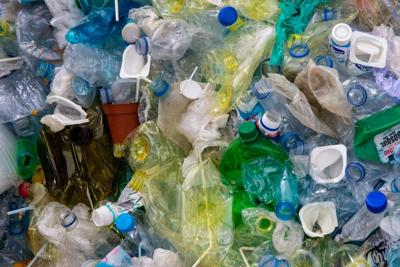

Over the last two months, the city of Spring Hill has seen recycling costs increase by more than 385% in some cases due to contaminants found in residents’ recycling bins.
The problem was exacerbated further after the markets for specific types of plastics plummeted, leading the city’s usual recycling plant to temporarily reject certain types of plastics.
Cost breakdown
Historically, the city of Spring Hill typically incurs costs of around $5,300 a month for recycling services, collecting around 211 tons of material on average.
After a change in service caused a series of contaminant discoveries, August saw the city pay $19,806 for hauling 140 tons of material, and $25,800 in September for hauling 178 tons.
Medical Waste
Calling the matter a “significant issue,” Spring Hill City Administrator Victor Lay explained that around six weeks ago, the city’s usual recycling plant, the Marshall County Material Recovery Facility, notified city officials that they would temporarily stop accepting the city’s recyclables due to medical waste discovered in a recent load.
“That really bothered us because we've always had a history of clean recycling with very little contaminants,” Lay said. “What they found the first day was sharps, where someone had thrown some [needles] into a bottle."
After the medical waste was discovered, the entire truckload of recyclable material was taken to a landfill in Nashville; a standard practice for Spring Hill’s trash collection provider, Waste Management, as well as many other trash collection providers.
"They won't even deal with that — when they see it, they just shut the truck down and send it to the landfill,” Lay explained.
“So you could have a truck full of prime cardboard that just gets sent to the landfill because somebody dropped a needle in their recycling bucket. That's the seriousness of it and the waste of it all."
That Nashville landfill is the River Hills Recycling Center — it costs more to send things there because of the distance from the city.
The Marshall County facility said that in order for the facility to begin accepting Spring Hill’s recyclables again, the city would need to conduct two rounds of audits on every single recycling bin in the city.
Given that recycling is picked up in Spring Hill on a bi-weekly basis, the second and final audit is expected to be completed on Friday, Oct. 9. Lay said he was hopeful that the Marshal County facility would resume its relationship with the city by Wednesday, Oct. 14.
Plastic market crash
Another dynamic at play is the plastic market.
Historically, Spring Hill residents were able to recycle plastics 1-7. In late May, Lay explained that the market had crashed for plastics 3-7, leading the Marshall County facility to no longer accept those plastics. This caused any discovery of plastics 3-7 in a load to be rejected, and instead taken to the Nashville landfill.
Despite the change, many Spring Hill residents’ recycling bins, which are given to them by Waste Management through the city, still relay that plastics 1-7 are acceptable materials for recycling.
The city has distributed flyers in utility bills, stuck them inside recycling bins, and spread the word over social media, however, the confusion as to what is acceptable recycling material still persists.
Solutions
At the moment, city officials are working to educate the public on what recycling materials are acceptable, while also communicating the severity of the consequences of placing contaminants — both unapproved plastics and medical waste — into recycling bins.
Plastic 1 is typically used for liquid and food containers. Plastic 2 is a thicker plastic found in milk jugs, and some plastic bottles. Plastic 3 is found in doors, windows, playing cards and food packaging.
Non-acceptable plastics include plastic 4, which is often used for computer components and plastic bags. Plastic 5 is often used in packaging and labeling, with plastic 6 often used for lids, trays, packing peanuts and more.
For a breakdown of the seven types of plastic, click here.
Medical waste should never be disposed of in either recycling or trash bins. Depending on the type of medical waste, whether it be needles, bodily fluids or otherwise, the disposal method may differ. Click here for more information on how to properly dispose of medical waste.

Commented
Sorry, there are no recent results for popular commented articles.