
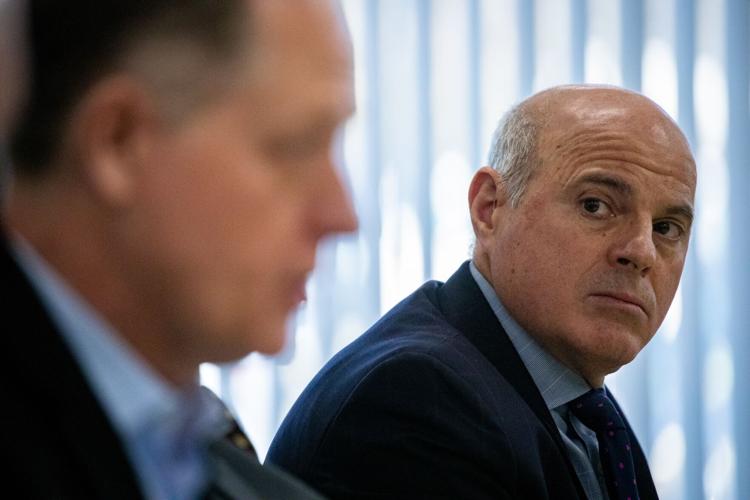


Rep. Gino Bulso (right) listens as Tennessee Majority Leader Sen. Jack Johnson (left) speaks to the Williamson County School Board at a meeting where legislators discussed the upcoming session with board members on Jan. 24, 2025.
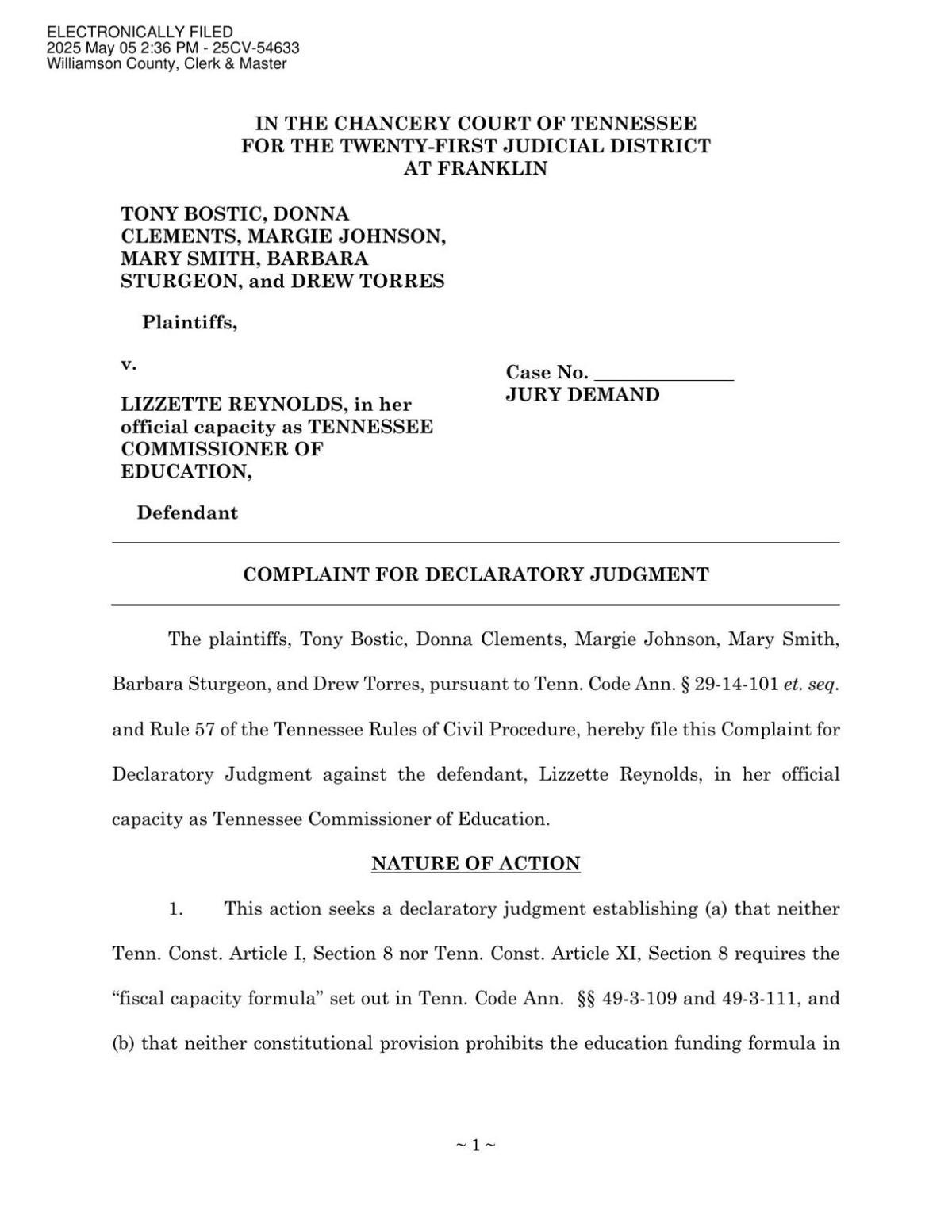
Three members of the Williamson County Board of Education and three members of the Williamson County Commission are suing the Tennessee Department of Education for the alleged “chronic underfunding of Williamson County Schools.”
WCS District 1 board member Tony Bostic, District 8 member Donna Clement and District 5 member Margie Johnson joined district five county commissioner Mary Smith, and district eight commissioners Barb Sturgeon and Drew Torres in the suit. The group is represented by Rep. Gino Bulso (R-Brentwood) who is also a lawyer.

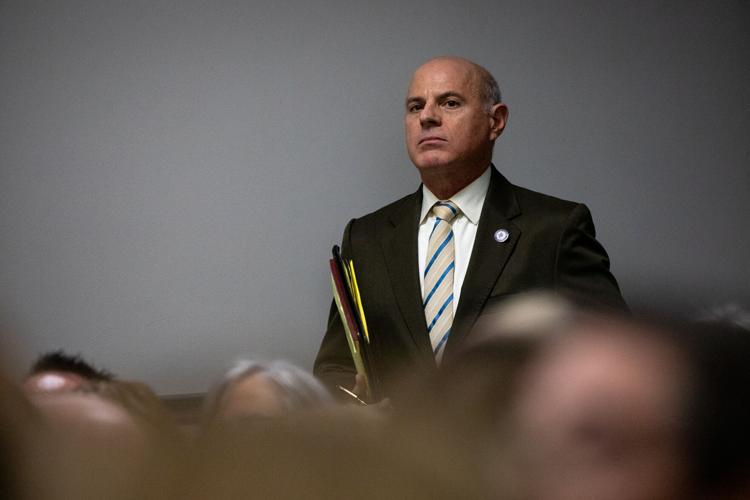
District 61 Rep. Gino Bulso, who represented parents in a 2023 lawsuit against Williamson County Schools regarding 'obscene' books, attends the Dec. 9, 2024, WCS Board meeting where the board removed three books from school libraries.
The suit, filed in the 21st District Chancery Court, alleges that Williamson County Schools received approximately $3,000 less per student than most other Tennessee counties in Fiscal Year 2025 through the state’s public schools funding formula known as TISA or Tennessee Investment in Student Achievement.
The complaint called the the state contribution of $4,294 per student “woefully inadequate for the education of a child in Williamson County” compared to what it said is an average of $7,300 per student across the state, adding that the “chronically underfunded” school system has negatively impacted the county's level of debt. The lawsuit also challenges previous Tennessee Supreme Court rulings.
“The fiscal capacity formula set out in Title 49 [or TISA] causes a material reduction in education funding that the Tennessee Department of Education provides to or on behalf of students who attend public schools in Williamson County,” the complaint reads in part, arguing that the county commission is “forced to provide additional funds to the Williamson County Board of Education to educate students in its public school system.”
Local Officials Respond
Several Williamson County commissioners and WCS board members told the Williamson Scene that they were unaware of the suit until after it was filed, in some instances a day or two after the filing.
Williamson County Mayor Rogers Anderson told the Williamson Scene he was aware of the lawsuit and did agree that the state’s funding system does challenge the county. He says almost 70 percent of local taxes go towards public education.
“Funding our education in Williamson County is a number one priority,” he said. “So the way the funding model is put together, with the TISA plan now and the old [Tennessee Basic Education Program] BEP 1 and BEP 2, it throws some challenges at fast growing communities that have sufficient revenue. … But is there ever enough money? No. Is there ever enough resources that could be applied to education? Well, we've had to apply them in other ways. You steal from one department and you put it over to another department, but schools, public safety, law enforcement, all that lumped together is some big part of any county's budget, because the county funds the schools, not the cities. So I hope they're successful in being able to get the Commissioner of Ed and the Department of Education to reevaluate some of it, but I'm sure it's going to be a long process to get it out.”
Anderson said that he hasn't seen school board members and commissioners take this more independent step before.
”In my 40 years of being there, I have not seen this type [of action],” he said. “Normally, you would see this at maybe a collaborative effort, either the school board or the county commission, but this has never occurred in our area. But again, we'll see what happens. The proof is in the pudding, and you're drawing attention to it, so over time, you'll see how this works out.”

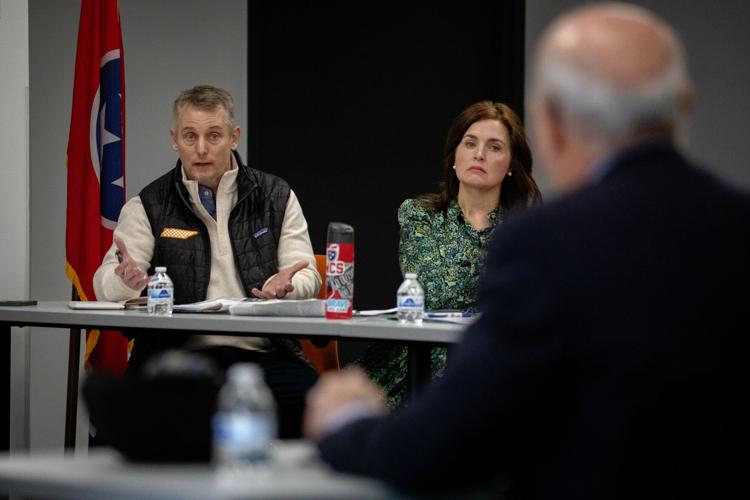
WCS Board Members Eric Welch (L) and Melissa Wyatt (center) question legislators including Rep. Gino Bulso (right) on Jan. 24, 2025 in Franklin.
District 10 school board member Eric Welch expressed disappointment with his three fellow school board members and criticized Bulso, telling the Williamson Scene that he was unaware of the lawsuit until we reached out to him for comment.
“It is indisputable that Williamson County Schools are underfunded,” Welch said. “As a state representative and member of the education committee, Gino Bulso was well positioned to advocate for our students and families during the most recent legislative session. Instead, Bulso’s efforts were spent fighting for taxpayer funded private school vouchers and suing the school district to strip away parents’ right to decide what their children could read in the library. Now that the session is over, Bulso is engaging in another blatant publicity stunt over substantive action. His lawsuit does not represent the WCS board of education, with whom he did not coordinate prior to filing or sending press releases to the media. I am disappointed in my colleagues who have allowed their names to be tied to this farce.”
District 6 school board member Jay Galbreath told the Williamson Scene it was “disappointing” that the lawsuit was filed without the full school board, county commission, mayor or superintendent.
“The lawsuit will likely be dismissed for lack of standing,” Galbreath said. “And that outcome will be deserved — because instead of pursuing collaboration, this group chose a solo political move when we should be working together on a real solution.”
Williamson County Board of Education Chair Josh Brown declined to comment, noting that the board is not involved in the suit. The school system also declined to comment.
“District leadership learned about this lawsuit [Monday, May 5,] but many members of our school board may not even be aware of it,” WCS spokesperson Carol Birdsong told the Williamson Scene. “We won’t be able to comment at this time.”
School Funding Efforts
WCS Superintendent Jason Golden highlighted Senate Majority Leader Jack Johnson‘s (R-Franklin) work to get the schools more funding during the 2025 Nolensville Annual Address on May 1.

WCS Superintendent Jason Golden
“In Williamson County, about two thirds of our [schools] budget is funded locally. That is not true statewide. The state has a structure where those who have the ‘fiscal capacity’ give that money to the state and receive less back as that fiscal capacity is distributed to other parts of the state. We are the biggest loser in that structure,” Golden said.
“Senator Johnson, just a few months ago, had a pretty deep discussion with our school board, and he made a commitment to us that he was going to find a way in this year's budget to mitigate some of that impact, and he did that just a few months ago. He was able to create a funding source for high performing school districts. … We were able to get $4 million out of that funding just this year to help offset some of that so we have capital.”
That funding was passed within the special session legislation which is intended to provide vouchers or scholarships for students in Republicans efforts to further school choice options.

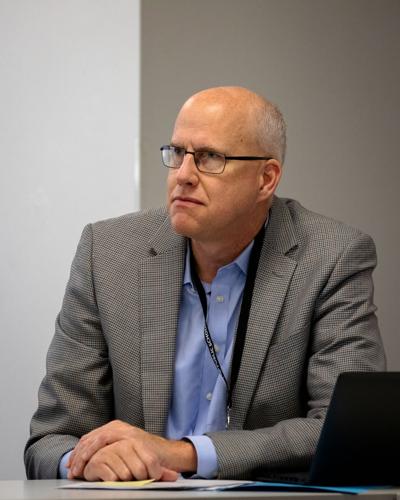
Tennessee Senate Majority Leader Jack Johnson attends a Jan. 24, 2025 meeting between legislators and the Williamson County Schools board in Franklin.
On May 6, Sen. Jack Johnson told the Williamson Scene that he's aware of the lawsuit but hadn't read it in detail but reiterated his previous public statements that “Williamson County does get a raw deal in the TISA funding formula.”
At the beginning of this year’s legislative session, Johnson told the Williamson Scene on Jan. 16 school choice and public school funding were separate issues when asked if there would be discussion about changes to the TISA formula due to the voucher legislation, or Education Freedom Act.
But, Johnson did say he believed there would be some things done “outside of the formula” to help the higher performing schools like Williamson County.
“Williamson County, the county commission, has done an amazing job and really stepped up to the plate to make tough funding decisions to support our public schools in Williamson County and I believe they’re being unfairly penalized for making those decisions by the state funding formula,” Johnson said in January.
The issue of public school funding was consistently brought up during discussion about the Education Freedom Act. Ultimately, there was what was called a “hold harmless” provision that did not allow schools to lose funding due to potential changes in enrollment for students who leave the district and may go to private school with the voucher program.
The provision that provided more funding for high-performance schools that Golden mentioned and Johnson hinted at before the session was also included in the voucher legislation.
The act allows 80 percent of taxes collected from sports betting to be set aside for local education agencies (LEAs) to utilize the funds for construction or maintenance of buildings. The state treasurer disburses $25 per enrolled student at the LEA in the order in which applications for funding are received. To receive funds, the LEAs must be located in an economically distressed county, be eligible for a fast-growth stipend or have at least half of the schools receive a letter grade “A” in the previous year from the department of education – which is the case of Williamson County Schools.


Commented
Sorry, there are no recent results for popular commented articles.