


PART THREE
The Duplex community sits within Spring Hill right on the edge of Williamson and Maury County. The name of the area has several origin stories, including one about an award-winning horse, but it was known as Duplex even before the Civil War.
Within a stone's throw from where the Rural Hill Church and Lee-Buckner buildings sat is the Spratt Cemetery. It was close enough that some of the men who went to the Lee-Buckner School remembered playing behind it as children and walking over into the cemetery.

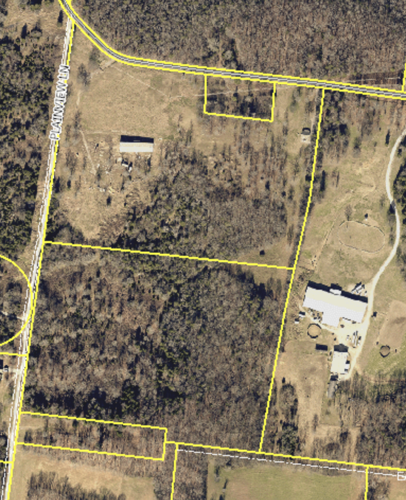
The small rectangle towards the top of the map is where Lee-Buckner was located. The long skinny rectangle at the bottom left is the Spratt Cemetery.
Some of the earliest graves are from the late 1860s and early 1870s. Monroe and Francis Lee are buried there, but many of the oldest graves are in a wooded area, and headstones like the Lees have sunken into the ground.
Finch said the historians have not been able to track down original land deeds and don’t know why it was named the Spratt Cemetery, but they do know of a Spratt family from the area. While tracking down that kind of information can be difficult today, she said they have found a deed that shows Black men purchased the land for the historic Toussaint L'Ouverture Cemetery in Franklin. Sometimes, these cemeteries don’t have any records or documents.
“Because African Americans are the keepers of their history, predominantly, when an elder dies, the story dies with them,” Finch said. “That's why the oral traditions are so important to African American communities. Many have written their histories down, but I think really only within the past two decades has the idea of collective history really come into practice within the public history world.”
Finch said in previous decades, histories of the whole collective in communities has been worked on, but its been more recent community-driven discussions that have led to talks about better preservation of cemeteries in areas like Duplex.
“I think that there now has to be a conversation on recognizing these cemeteries as historic places,” Finch said.
She added that not every cemetery may qualify to be on the National Register of Historic Places but that doesn’t mean they can’t be taken care of.
“People who are here have a story. Every single person buried in the cemetery has a story to tell, and how we tell that story is akin to how we remember our history.”
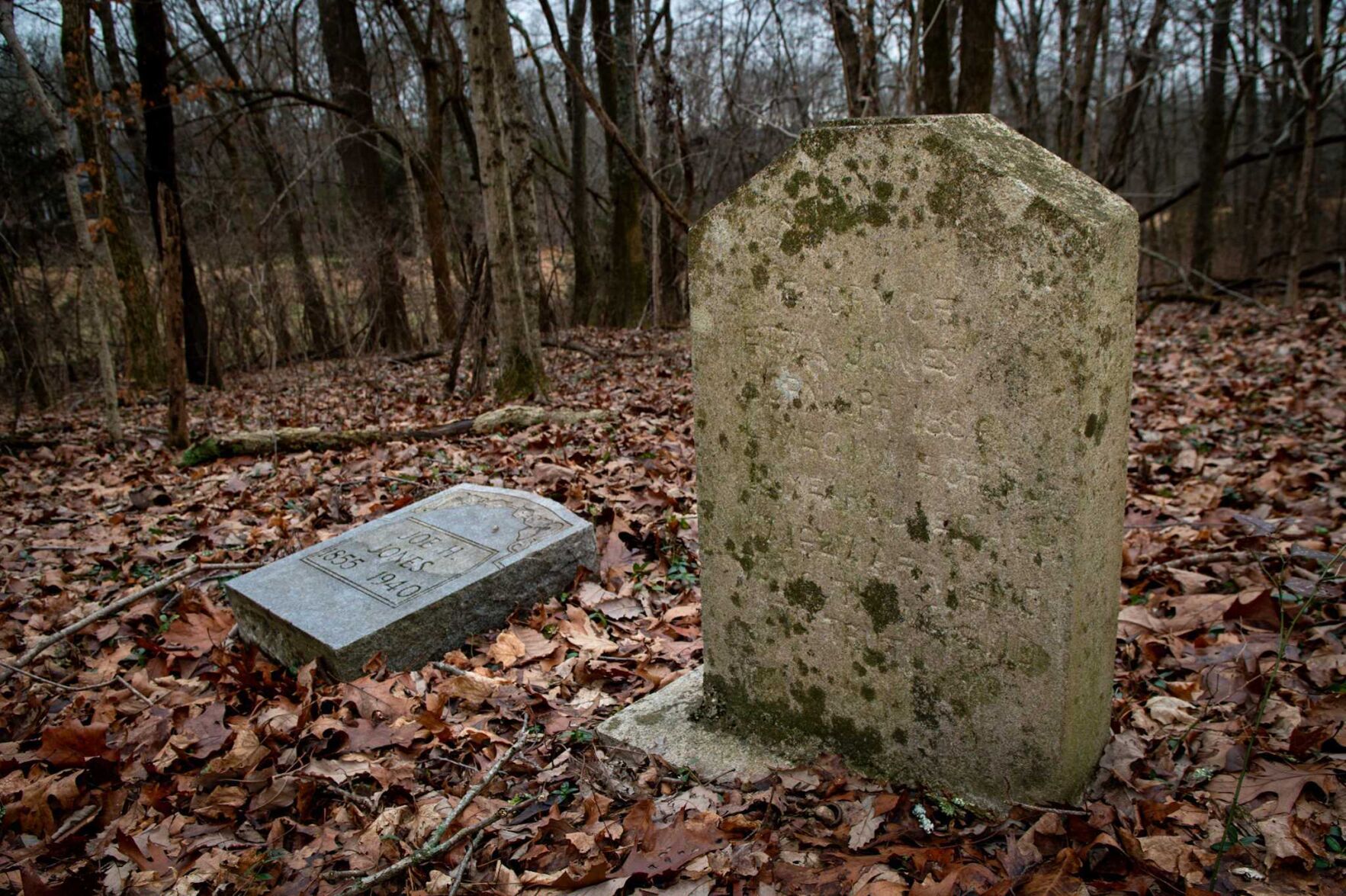
Joe Jones and Etta Jones headstones in the Spratt Cemetery
Finch pointed out the stone of Joe Jones, who was born into slavery in 1855 and died in 1940. A rudimentary stone that sat next to his is believed to be his daughter, Etta Jones, who was born in 1886 and died in 1927. There is a reference to her living in the church, leading some to believe her father may have been the pastor. She was thought to have potentially taught at Lee-Buckner before her death and even at the church before that. Her headstone reads, “A friend to youth and to truth.”
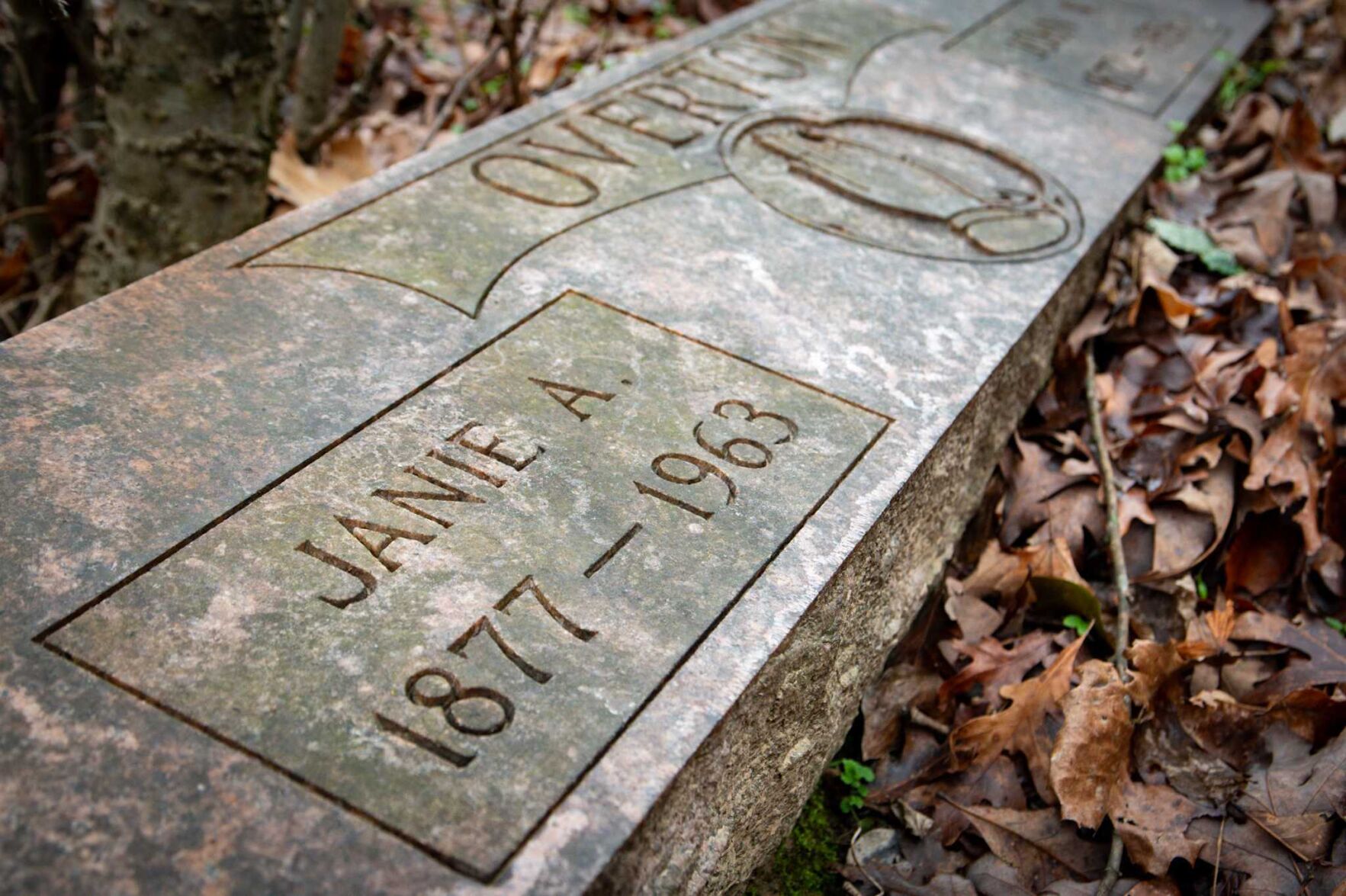
Janie Overton's headstone at the Spratt Cemetery
One of the first women known to teach at the school, Janie Overton, who died in 1963, is also buried in the Spratt Cemetery. Her parents were born into slavery, but in 1877 she was born free and later married into the Overton family in Duplex.
“A lot of the teachers are buried here, in this cemetery,” Finch said, adding that they have just scratched the surface of uncovering the history involved.
“I think that's an even greater story that we have yet to really explore. But yet, one that we know is very rich.”
Standing in the Spratt Cemetery, it's hard not to hear the hum of cars on the interstate nearby. The stretch of I-65 between Columbia and Franklin was completed in the mid-1960s. The rural farm land of Williamson County was forever changed with the major interstate now running through it.
“Any encroachment, even though it was progress, disrupts the community,” Finch said. “It shifts the way in which they all interact with one another.”
Today, there's a bridge that goes over I-65 connecting Spring Hill using Duplex Road. Running parallel to the interstate on one side of that bridge is Lee Road and on the other is Buckner Road. Finch said they haven’t determined yet exactly how the name of Lee-Buckner came about. There’s the connection with the Lee family who donated the land but not one to a Buckner family they’ve uncovered. But, it's possible the location of the school sitting between those two roads could have been how the name came about.
“I think urban renewal did hurt communities, but it didn't stop the resiliency of the communities," Finch said. "Was there loss of homes or churches or schools? Yes."
While Lee-Buckner wasn’t one of the schools that was lost, there were others.
“The Hard Scuffle community in Brentwood was an excellent example of the power of urban renewal, pretty much eradicating one community, except for the cemetery that still stands today," Finch said. "They did lose the Rosenwald school as a result of that.”
Finch said that she, along with other Williamson County historians, have been working to piece together the narratives of the displaced communities but have faced challenges as many descendants have moved away from the area.
“While we know a lot about the history of Williamson County, the history of the African American experience of Williamson County is something that has really yet to be fully explored, delved into and digested,” Finch said. “Really digging into each small community, in my opinion, has not really been fully explored and vetted. And, I think that there's a tremendous opportunity now to be able to do that.”
She said there is something to be learned from the roads less traveled now around where these transportation corridors were built, where communities like Duplex still exist. As America begins to grapple with rediscovering displaced communities, old buildings like the Rosenwald Schools help tell those stories.
“The descendants of people who have been here since the Civil War, continuing to live and raise their families or see their grandchildren and great-grandchildren and in certain cases, their great-great-grandchildren, continue to thrive,” Finch said. “They really didn't see the progress of the interstate system, for example, slowing down their progress to continue to achieve and inspire their next generation to be successful.”
Even though the physical building of Lee-Buckner has been moved, there have been ongoing conversations about putting up a historical marker to commemorate the property it was originally built on in Duplex.
Finch also suggested that, through the use of technology, there will be other ways the Heritage Foundation can keep the connection between Duplex and the school.
“I think that there are going to be more opportunities to partner with the alumni and really learn more about the history of Duplex as a community – as it pertains to the school and how we move forward, telling the history of the school at Franklin Grove,” Finch said.