
By LANDON WOODROOF
A bill pertaining to short-term residential rental regulation was recommended for approval by a state Senate committee Monday, albeit shorn of its more controversial aspects.
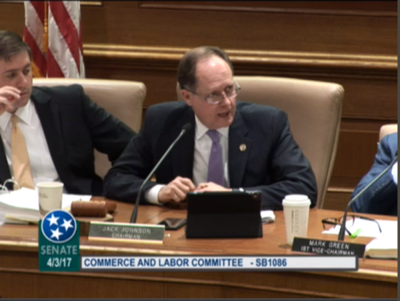
The Senate Commerce and Labor Committee, chaired by Sen. Jack Johnson (R-Franklin), had been considering SB1086 for weeks. The bill, as originally written, would have ended local governments’ right to ban short-term rentals, like Airbnb.
This met with some resistance on the committee from senators who felt uncomfortable taking away local control of land use and zoning regulations.
Sen. John Stevens (R-Huntingdon), the bill’s sponsor, admitted Monday that he had reached an impasse in negotiations over that part of SB1086.
“In meeting and discussing this over the last several weeks with the stakeholders we have not come to any consensus on the land use sections,” Stevens said.
There is another key part of the bill, however, that deals with tax remittance and collection issues relating to short-term rentals.
Stevens requested that all language regarding land use and zoning be taken out of the bill and that the tax portion be allowed to move on to the Senate Finance, Ways, and Means Committee.
Sen. Johnson agreed and sponsored an amendment to do that.
“This is an important development and a good one because one of the issues that’s been hanging out there is, those who are operating short term rentals, are they paying the proper tax?” Johnson said.
Stevens explained further what his bill could still accomplish.
“The intent is to not touch any of the land use, so if a local entity wants to ban … they can do that,” he said. “It’s merely just putting in place some of the background where an online marketplace, if they want to be a one-stop shop to collect and remit … the Department of Revenue can know that they are collecting the proper amount.”
He estimated that only about 40 percent of taxes owed by short-term rental operators was actually collected.
Before Sen. Johnson held the votes to adopt the amendment and recommend the bill to the finance committee, he got an assurance from Sen. Stevens to bring the bill back to the Commerce and Labor Committee if any of the land use language was reinstated or if the bill was amended any further.
The bill was approved by the committee with eight ayes, zero nays and one pass.
Commented
Sorry, there are no recent results for popular commented articles.