
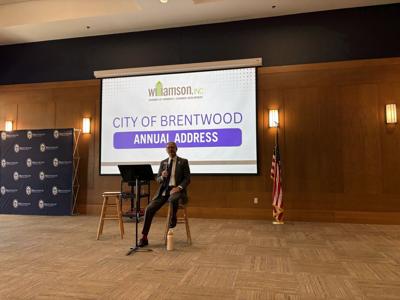

Brentwood Mayor Nelson Andrews talked extensively about the city’s response to February’s ice storm in his annual address on Thursday.
The storm laid a few major issues for the city bare, including a lack in cell phone towers. Brentwood is a “one bar” town and it’s not uncommon for calls to drop in the area, Andrews said, but it’s more than just an inconvenience.
“That ice storm reminded us that the cell data is a public safety issue," he said. "This is a big deal.”
The cell phone towers in the city had not been updated in 25 years, he said. In the past, the towers needed a radius of land in case they fell, but today’s towers have mechanisms that allow them to fold in on themselves.
“There are specific safety requirements that have to be in place, but they weren't reflected in our code," he said. "So we're just making some very minor changes in our code to reflect the current technology.”
Four additional towers are under construction, Andrews confirmed Thursday.
Anderson remarked that much of the feedback he gets as mayor is related to traffic.
“A lot of times people say we need to get back to where it was 10 years ago, and I look back 10 years ago, and they're like, 'We need to get it back to where it was 10 years ago,'” he said.
He said investing in commercial districts so people can work, play and shop without driving would benefit the traffic issues, as well as plans to connect the various parts in the area via greenways or walking paths.
The mayor also said he would like to see decreased dependence on cars, but didn’t give a full endorsement to the seemingly infamous popularity of e-bikes in the area, something that Williamson County Schools also cracked down this year.
“There's some things that we can agree there's an issue, but I'm not necessarily doing anything about it," Andrews said. "With e-bikes — I'm kind of a small government, almost libertarian in a lot of views as far as some of that stuff goes. We're to figure out how to square that with trying to make sure that somebody that doesn't know any better doesn't take a chance they didn't know they're taking.”
“As Brentwood, how do we support the state law? How do we keep people safe without overstepping and getting somewhere we don't need to be?”
The storm cleanup cost $7 million, which was covered by the city's reserves — something Andrews said he cannot take full credit for but is proud of.
“This has been going on for a couple of decades, where Brentwood has been making sure to live within our means and have money available for the unexpected, so it's just a great lesson both in disaster management but in the quality of our team at Brentwood," he said.