
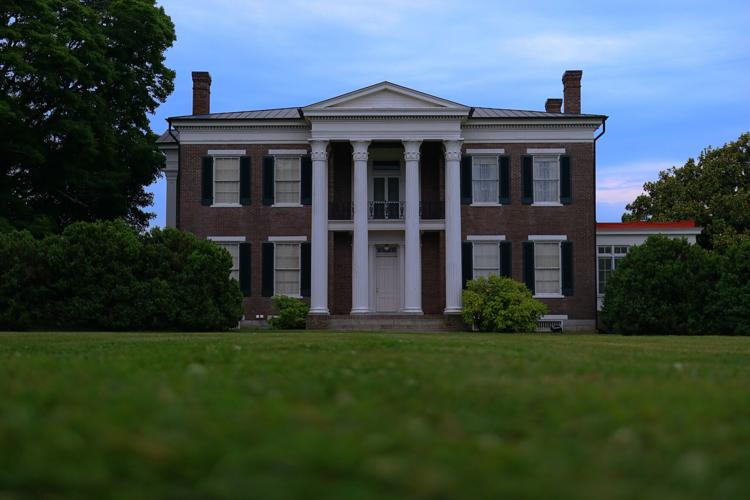

If you take the newly added “All Men Are Created Equal” Tour at Rippa Villa plantation in Spring Hill, some of the terms will certainly be familiar from your grade school history class. Visitors may even remember events like the Stamp Act, Olive Branch Petition, the Three-Fifths Compromise or even “shot heard ‘round the world.”
It’s tour guide Shelia Mullican’s job to stitch these Revolutionary War events together and help visitors connect them to the Civil War history that the site is known for, as part of the Battle of Spring Hill. It’s especially timely 250 years later, on the anniversary of the signing of the Declaration of Independence that declared “all men are created equal.”
“One of the things that we've tried really hard to do here is to let people know that history is an arc, it's a continuum, and you can't really understand the Civil War without understanding the Revolutionary War,” Mullican tells Williamson Scene. “One is essential to the other.”
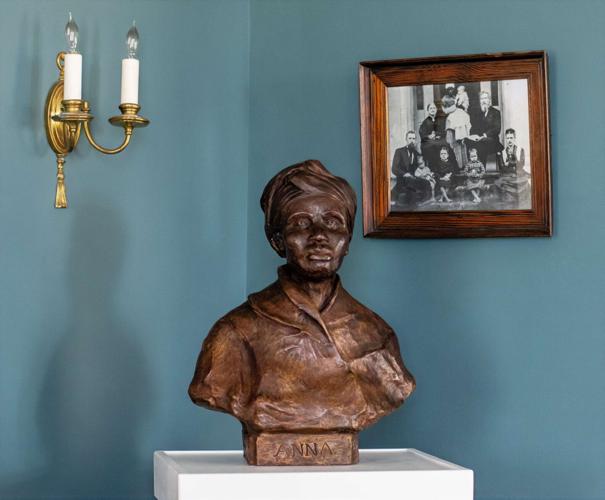
Mullican also reminds people that the “all men” wording was not true at the time. Hundreds of thousands of people, including as many as 75 people at Rippa Villa, were still enslaved. When the Battle of Franklin Trust took control of the site in 2021, it began adding more information to tours about those who were enslaved. This includes the addition of a bust of Anna McKissack Bunch, who was enslaved by the Cheairs family at Rippa Villa before she was freed in the 1880s and began working as a cook there.
“It’s very important to us that we tell an inclusive story,” Mullican says. “So, as soon as we started researching here, we're researching everybody's story.”
Proceeds from each “All Men Are Created Equal Tour” ticket will help fund a new exhibit of the same name at sister location Carter House, which is set to open later this year.

A bust of Anna McKissack Bunch, who was enslaved at Rippa Villa before working there post-emancipation.
Mullican points out that the founding fathers did not include the terms “slavery” or slave in the original 1787 Constitution, which could show an inclination to move away from the institution entirely. Founding father John Dickinson freed his slaves in his lifetime. George Washington did after his death.
“I believe that the founders envisioned that was where we were heading, and they did some things to try to help that along by creating areas like the Northwest Territory that were always going to be protected from slavery,” Mullican says. “I think they did it by using intentional language in the Constitution, and they were trying to set us on a course toward that.”
She argues that the path toward eradicating slavery was interrupted by the introduction of cotton.
“It really almost freezes the minds of people living in those lower southern states, because when machinery starts to be invented, farm machinery, they're not embracing that, because they're not the ones out there working,” Mullican says.
Slavery was the issue that made young America begin to drift apart, and set the stage for the Civil War and the Battle of Spring Hill.
The “history nerds” at Battle of Franklin Trust may read about history for fun, but for many visitors, it may be hazy or stale.
“We want to make it bright again,” she says. "We want to make it vivid. We want to make it very real, so that when you're out there shooting off your fireworks that night, that it's not just a time to picnic, but it's a time to really think about what happened here that has never happened anywhere else.”