
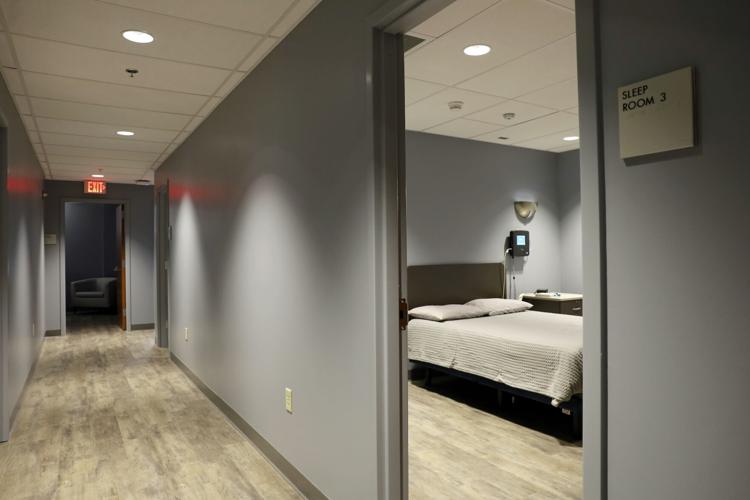
Williamson Health has renovated its Sleep Lab to make it easier for patients to doze off.
The rooms are larger, with attached private bathrooms, plus new paint colors, mattresses and bedding, in addition to updated equipment.
“The goal here is to take away some of the feelings that you're going to a sleep lab and that it's just an extension of a hospital,” said Aaron Milstone, medical director of the Sleep Center at Williamson Health. “Historically, when patients come to a sleep lab, and it looks like a hospital setting, they have all kinds of difficulties falling asleep, they have a lot of awakenings, they have a lot of anxiety. What we've done is we've tried to mimic your own bedroom.”
The center has four beds operating six nights per week and is in the process of adding an additional bed. For those that still aren’t comfortable, there are 20 available take-home devices for home study. The Sleep Lab also brought on two new physicians, several polysomnography technicians (experts in sleep study), and renewed its accreditation from the American Academy for Sleep Medicine.
That makes for a lot of sleep studies per month, Milstone points out, to match with a growing number of sleep disorder diagnoses in the country. According to the National Heart, Lung and Blood Institute, 50 to 70 million Americans have sleep disorders.
“If you think about how big our country is, that is a large percentage of the pie that has some underlying sleep disorder,” Milstone said. “We are not able to keep up with the demand. The demand continues to be very high, and we also continue to recognize that there are more and more diseases that can be either caused by poor sleep or affected by poor sleep, and those include high blood pressure, stroke, heart attack, diabetes and possibly cancer.”

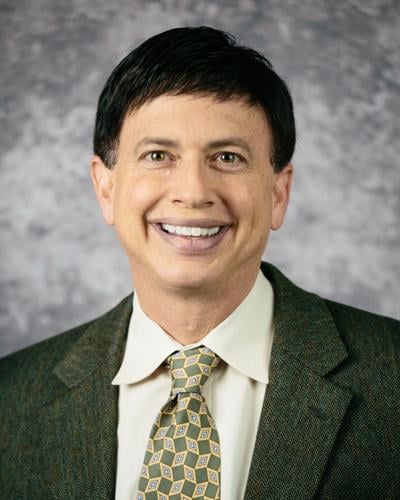
Aaron Milstone, medical director of the Sleep Center at Williamson Health
Sleep disorders are becoming more common, which Milstone credits to increased education and technology. Patients who are overweight are also more likely to develop sleep apnea. Patients come into the clinic prompted by their smart watches and other surveillance devices on a daily basis, he says. Milstone himself wears one.
“As smart technology has increased, the ability for people to identify sleep issues at home has become more prevalent as well,” he said. “So I definitely think it's a combination of technology, obesity and educational awareness.”
There are limits, however. Technology focuses on movement and often isn’t able to truly detect REM sleep or breathing.
“They tell you that there may be something wrong, but they're not perfectly accurate, and they're not always correct, and so I always tell patients to take the data with a grain of salt, and the very best way to confirm or disprove is to do a sleep study,” Milestone said.
Sleep apnea, when a person stops breathing during sleep, is especially dangerous, he points out. High blood pressure, a heart attack, or even feeling sleepy on the ride home from work can be signs of the condition. People get in the habit of pushing themselves through those things or addressing them with medications.
It’s very easy to become a caffeine addict, too. Milestone recommends avoiding it at least six hours before sleeping. Beyond making it harder to fall asleep, it’ll reduce the quality of sleep, too.
“If you have poor sleep because of caffeine, the next day becomes even more difficult to function through,” Milestone said. "And what do people do? They add more caffeine the next day. This is a vicious cycle.”
The world is fast-paced, he says, so it’s important to slow down and address potential sleep disorders. Milestone’s list of people who could benefit from a sleep study at the sleep lab is long and well, exhaustive.
“It's anyone who has fatigue, anyone who has issues with blood pressure, anyone who has difficult-to control blood sugar, anyone that has irregular heart rhythm, anyone that has kidney disease or chronic kidney issues, any child who's not performing well in school, any adult who has excessive accidents in the workplace," he said. "And that's just the tip of the iceberg."


Commented
Sorry, there are no recent results for popular commented articles.