
The Williamson County Commission passed its fiscal year 2026 budget at a meeting on June 20. The new budget levies a county property tax rate of $1.30 per $100 of assessed property value, a significant decrease from the county’s previous rate of $1.88.
Beyond setting its yearly budget, this year the Williamson County Commission set the county’s new property tax rate following the county property assessment, which takes place every four years. The county’s base tax rate went down to $1.2433 per $100 due to the increased value of the county’s taxable property. However, the county is levying a slightly higher rate of $1.30 so that while the overall rate still decreases, the county can have more funds to invest in schools as well as other county projects and services.
This year’s tax rate is broken down as follows: $0.75 goes to the general purpose schools fund, $0.28 to the county general fund, $0.15 to general debt services, $0.09 to rural debt services and $0.03 to solid waste/sanitation.
After debate about pay raises, which led to the determination of the tax rate, the commission officially voted to pass the new total budget amounting to more than $903 million, which took effect July 1.
Pay Raise Debate
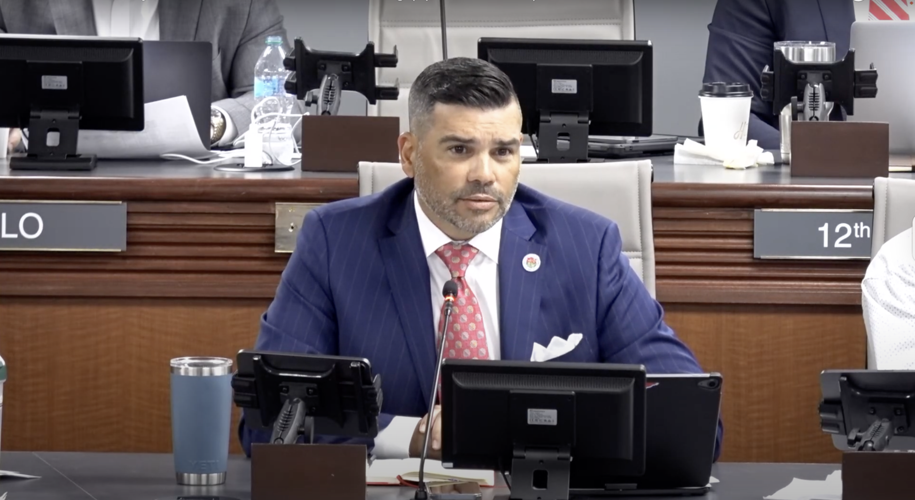
Much of the commission’s discussion centered around a potential pay raise for the Williamson County Sheriff's Department. District Eight Commissioner Drew Torres proposed an amendment to the budget early in the meeting that would increase pay for members of the department to the 75th pay percentile.

District Eight Commissioner Drew Torres at the June 20, 2025 Williamson County Commission Meeting
Previously, employees have been compensated at the 50th market percentile, meaning that they earn the median rate compared to all other sheriff's department employees in the country, or half earn more and half earn less. Increasing pay to the 75th percentile puts the department at a more competitive rate, as employee salaries will be higher than most other markets.
Just over a dozen uniformed members of the sheriff's department sat in the audience as the commission debated the amendment. Williamson County Sheriff Jeff Hughes spoke to commissioners, emphasizing that a pay increase would help the county retain current employees after many have left to seek higher compensation in other municipalities, including surrounding areas.
“[The raise] is going to be a huge step in the right direction. It’s going to bring us more in line with those in our backyard that we’re competing against,” Hughes said.
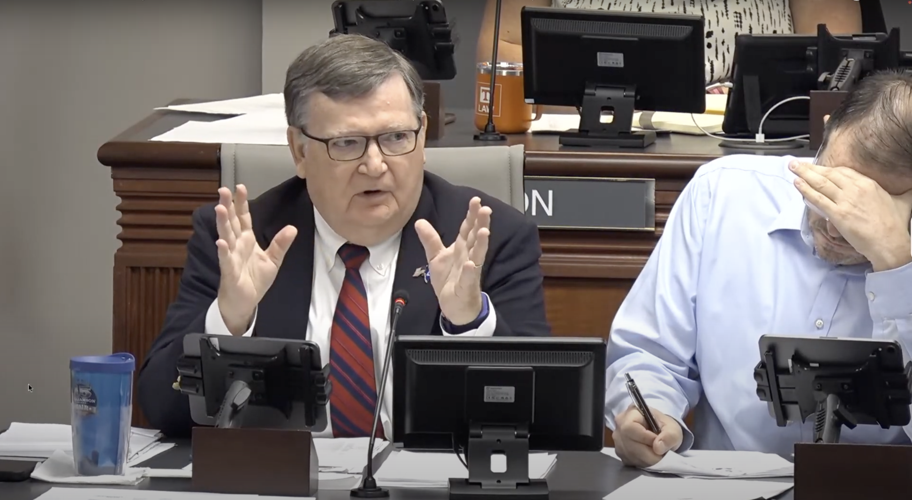
After initial discussion about a pay increase for the sheriff's department, District Six Commissioner Paul Webb proposed a second amendment that would bring compensation for all county employees to the 75th percentile. Webb explained that while this wouldn’t necessarily mark an increase for every employee — compensation for some is already at or has exceeded the 75th percentile — it would ensure that the county is offering competitive pay. After Hughes spoke about his employees leaving for better pay, Webb said that he’s seen the same occur with other county employees, which inspired his amendment.

District Six Commissioner Paul Webb at the June 20, 2025 Williamson County Commission Meeting
“Just in the last two weeks, I had somebody that I had been working with, and they went to work for Franklin and got a significant pay raise,” Webb recounted. “How many more people are going to leave and how many positions do we have open because we can’t pay them under this scale?”
In discussing both amendments, commissioners proposed adding an extra cent to their previously proposed tax rate of $1.29 per $100 to fund the extra pay. The additional cent would raise approximately $2.7 million. Torres’ proposed raise for the sheriff's office would cost the county $1.275 million, and Webb pointed out that the additional nearly $1.5 million could go towards his amendment to bring all county employees to the 75th percentile.
When asked if Webb’s amendment would help the county recruit and retain talent, Director of Human Resources Clair Cochran said that she thinks that “the market is way far ahead of us” and that the county’s current pay rates make it difficult to compete with surrounding employers.
“You look at Brentwood, you look at Franklin, you look at Rutherford County, they’re all playing ball in the 90th or 85th percentile,” she said.
However, several commissioners said they believed a pay increase for the sheriff's department should be the top priority, and Webb’s amendment failed 10-13. After Webb’s amendment failed, the commission voted unanimously to pass Torres’ initial amendment to increase pay for members of the sheriff's department. The discussion then moved towards approving other parts of the budget and levying a county property tax rate.
Revisiting the Vote
Then things got funky — after the commission took a recess to attend a lunch and take a group photo, Chairman Brian Beathard announced that there had been a misunderstanding about the previous vote on Webb’s amendment.
“Commissioner Webb [said], ‘Hey I think some people are confused here that they believe my amendment is canceling out the first amendment.’ And after lunch two commissioners approached Jeff [Graves] and said that was very much the case for them, and so they would like us to have an opportunity to reconsider,” Beathard explained.
District Five Commissioner Greg Sanford said he had been confused about the language of Webb’s amendment to bring all employees to the 75th percentile, and thought that it did not include sheriff’s department employees (which he had been in support of), and thus had voted no. District Two Commissioner Betsy Hester said that the iPad she cast her vote on “malfunctioned” and though she had intended to vote in favor of the amendment, her vote had shown up as a no.
In order to revisit Webb’s amendment, the commission needed to go through the process of voting to go back several agenda items. Of the commissioners, 14 voted to revisit Webb’s amendment, eight voted not to. District Eight Commissioner Barb Sturgeon voted not to revisit the amendment, explaining that she felt that the break in procedure looked bad, especially since District Four Commissioner Gregg Lawrence had to leave the meeting after lunch and would be unable to vote again.
“I just want to express that this seems like really bad optics and very unorthodox to go back and reconsider a vote that we already had, and now we have one less commissioner,” she said. “And we all go to lunch and have a nice conversation and we come back and decide we’re going to re-vote? This just looks really bad and I think it’s regrettable that it’s being done.”
Beathard briefly explained that though the move is unusual, it is allowed by county bylaws since Sanford, who requested to revisit the vote, had originally voted in the majority. After the commission voted to reconsider Webb’s amendment, discussion resumed. Torres, along with commissioners Matt Williams (District Nine), Billy Petty (District 10), Mary Smith (District Five), and Lisa Hayes Lenox (District One) said that while they didn’t feel they had enough information to support a county-wide increase at the moment, they would seriously consider it in the future after more financial information was available.
District Two Commissioner Judy Herbert said she strongly supported bringing all employees to the 75th percentile, in part because she’s seeing staffing issues in critical areas. She asked Emergency Communications Director Kristy Borden to speak to the commission, who said that the 911 line currently has 11 open positions, with many individuals leaving due to low compensation.
The new vote on Webb’s amendment passed 12-10, with Sanford and Hester switching their “no” votes to yes and Lawrence, who originally voted no, having left.
Discussion then returned to the tax rate. Williams briefly proposed an amendment to bring the tax rate to $1.32 per $100, but that failed 9-13. The commission then voted on the previously proposed $1.30 tax rate, which passed 16-6.


Commented
Sorry, there are no recent results for popular commented articles.