
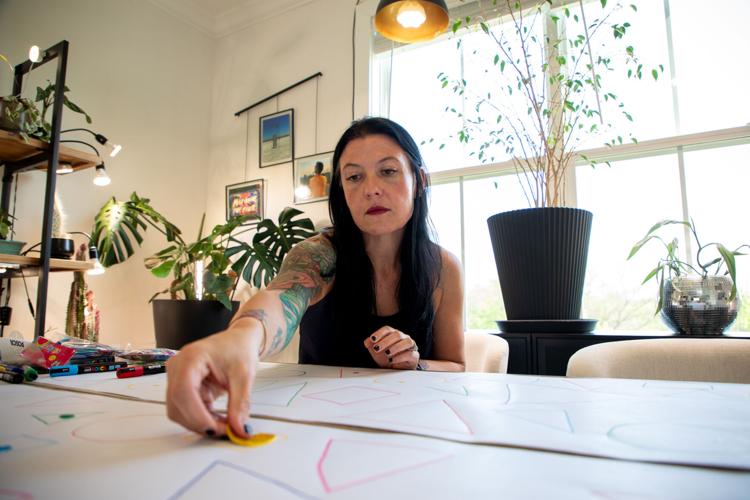
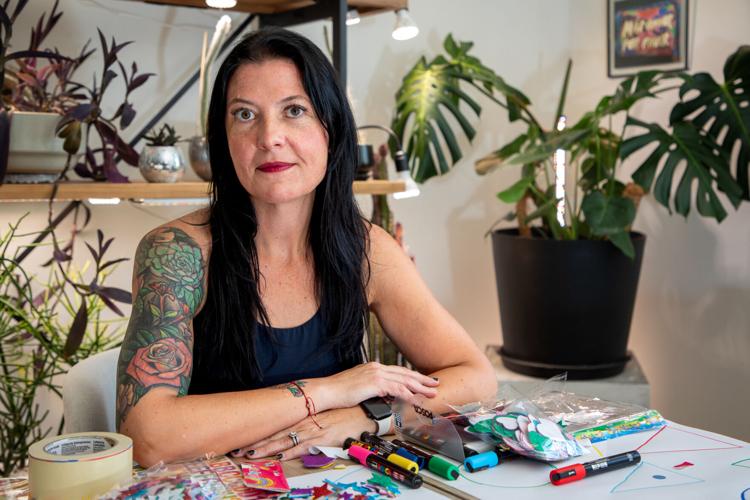

While taking her daughter to gymnastics, Sarah Willms was thinking about the future school year.
Since last year, Education Freedom Scholarships — or vouchers — have been a huge discussion point for Williamson County families. While some favor the program and others want to see public tax dollars only for public schools, Willms is one of the thousands of families who applied to use a voucher for her children’s school and lost out in the lottery selection.
Her daughters attend a private school in Williamson County. With three children, Willms noted that an expansion of Tennessee vouchers — known as the Education Freedom Scholarships — would help her family. This upcoming school year will offer a total of 35,000 scholarships.
She’s hoping Gov. Bill Lee’s expansion of the program will help her family, as the legislature just passed the measure, which is sitting on his desk waiting for a signature.
Last year, the College Grove mom was disappointed that her family was not among the 20,000 who could use the program.
“My sister and I logged in at the same time, and I sat there for 45 minutes,” Willms said. “She got it for her kids. I didn’t for mine.”
She said that the scenario has led to frustration for thousands of parents who applied and didn’t get into the program. Willms said private school parents like her have been sacrificing. This year, each scholarship will be worth roughly $7,500, an increase from last year’s value of $7,295.
“Sacrifice is different for everyone,” she said. “For us, I am going to try to work more as a mom. You choose not to take certain vacations. You choose to stay home for spring or fall. I’ve had conversations with other moms about how you choose to scale back in different ways of life.”
Under the expansion bill, students who received vouchers during the previous school year will get top priority, followed by students whose household income falls below 100 percent of federal eligibility for free or reduced-priced lunch. After that come students whose annual household income is below 300 percent of that amount, and then students whose household income exceeds 300 percent of that amount and are currently enrolled in public school or entering kindergarten.
The lowest prioritization would be given to students whose annual household income exceeds 300 percent of the federal eligibility amount — meaning some vouchers could go to students who already attend private schools.
Willms is hoping that will be her family.
“I think for us it’s being around like-minded parents with the same values,” Willms said. “Christ is at the center of what they are learning each day. The Bible is the source of what we choose between right and wrong. We are parenting from the same viewpoint. The voucher for our school would cover half the tuition. I feel like for our parents, that covers a lot of our tuition, and it makes it possible.”
‘We need accountability.’
But not everyone in Williamson County views vouchers through the same lens. Some families want to see better parameters for who gets them, while others are worried about special needs children who won’t have the same protections as they do in public school.
Some are concerned that those who need a boost aren’t getting the vouchers in the first place.
Lacy Ezell is one of those parents. She is a PTO mom in Thompson’s Station and an educator by trade.
“It’s a pretty convoluted issue, and everyone has an opinion. I am a teacher myself. I have taught in private and public schools. I deal a lot with homeschool students. I have seen it all. I totally agree with the beauty of where we live and families being able to have a choice. We live in a pretty affluent area. Our challenges are much different than Nashville, Chattanooga and Memphis. We have it pretty good. Our teachers are very great and dedicated. We have, for the most part, family support at our schools. But are these vouchers going to those who need them? I am not sure.”
A Tennessean public records request showed that scholarship families made an average annual income of more than $96,400.
Parents like Jon Blankenship of Franklin said he is pro-public schools and transparency. Like Willms, he made a deliberate choice on where to send his children for their education in the Franklin Special School District.
“It’s a personal choice for everyone, and I am a product of public schools,” Blankenship said. “I believe in public schools. I believe in diversity and fully supporting public schools. We talked about sending them to private school, but around here in Middle Tennessee, depending on what private school you attend, you’re not going to get any economic diversity or racial diversity either. It was important to us for our kids to go to school with people who don’t look like them. It was important to us that they grew up and they were educated. Our schools are a testament of that, and we are proud to be FSSD.”
He would like to see the same amount of scrutiny on the dozens of private schools where state money is going, just as much as the two school districts in Williamson County.
Lawmakers debated the transparency of vouchers heatedly, with Rep. Jody Barrett (R-Dickson) crafting a bill to provide data on the family income of students receiving vouchers to attend private schools. Rep. Sam McKenzie (D-Knoxville) filed similar legislation for a comptroller’s report to detail the program. Both initiatives failed.
When asked about the data surrounding vouchers, House Majority Leader William Lamberth (R-Portland) said he "didn’t know and didn’t care."
That type of thinking didn’t sit well with Blankenship.
“I am not anti-voucher, but I am for reasonability and transparency,” Blankenship said. “If we do more data, everybody could have a more informed opinion either way.”
An outright no
While some believe in vouchers for some children’s educational circumstances, some parents feel the program is simply wrong for Tennessee.
“So as a parent who’s been fighting for schools to be funded for years and years, Tennessee is at the bottom of the list of how much we spend per pupil,” former school board member and Nolensville mom Anne McGraw said. “Even in WCS, when parents pour in millions to close gaps, the government is subsidizing private education instead of pouring more funding into public schools. And send that money instead to a private school. They are spending more on the voucher than on per-pupil spending.”
Williamson County Schools has 48 schools and nearly 40,000 students. From a state funding perspective, the district only receives 28 percent of its per-pupil spending, according to the Tennessee Comptroller of the Treasury. Nearly 70 percent of its funding comes from the local level or Williamson County taxpayers.
Likewise, the FSSD is in the same circumstance, with only 24 percent of its funding coming from the state. It has eight schools and around 3,500 students.
Other Nolensville mom Amy Wolfe moved her family into the district for the schools. Wolfe said, like private school parents, she made sacrifices to ensure her three children could attend the best school district in the state.
“if the voucher program was going to kids with special needs or truly to low-income families, that one thing, but that’s not what’s happening,” Wolfe said. “Frankly, in the whole grand scheme of things … to me I don’t think it’s a good idea. I have reached out to my lawmakers and legislators. I don’t get a real answer back. I get an, ‘I disagree with you, thank you for the message.’ Where’s the opportunity to share where I feel about things? I have emailed all of them up to the governor. My mom always said you can’t complain if you don’t vote or make your voice heard. I have. It leaves me incredibly frustrated and disappointed in our lawmakers. I strongly feel it is the wrong choice.”
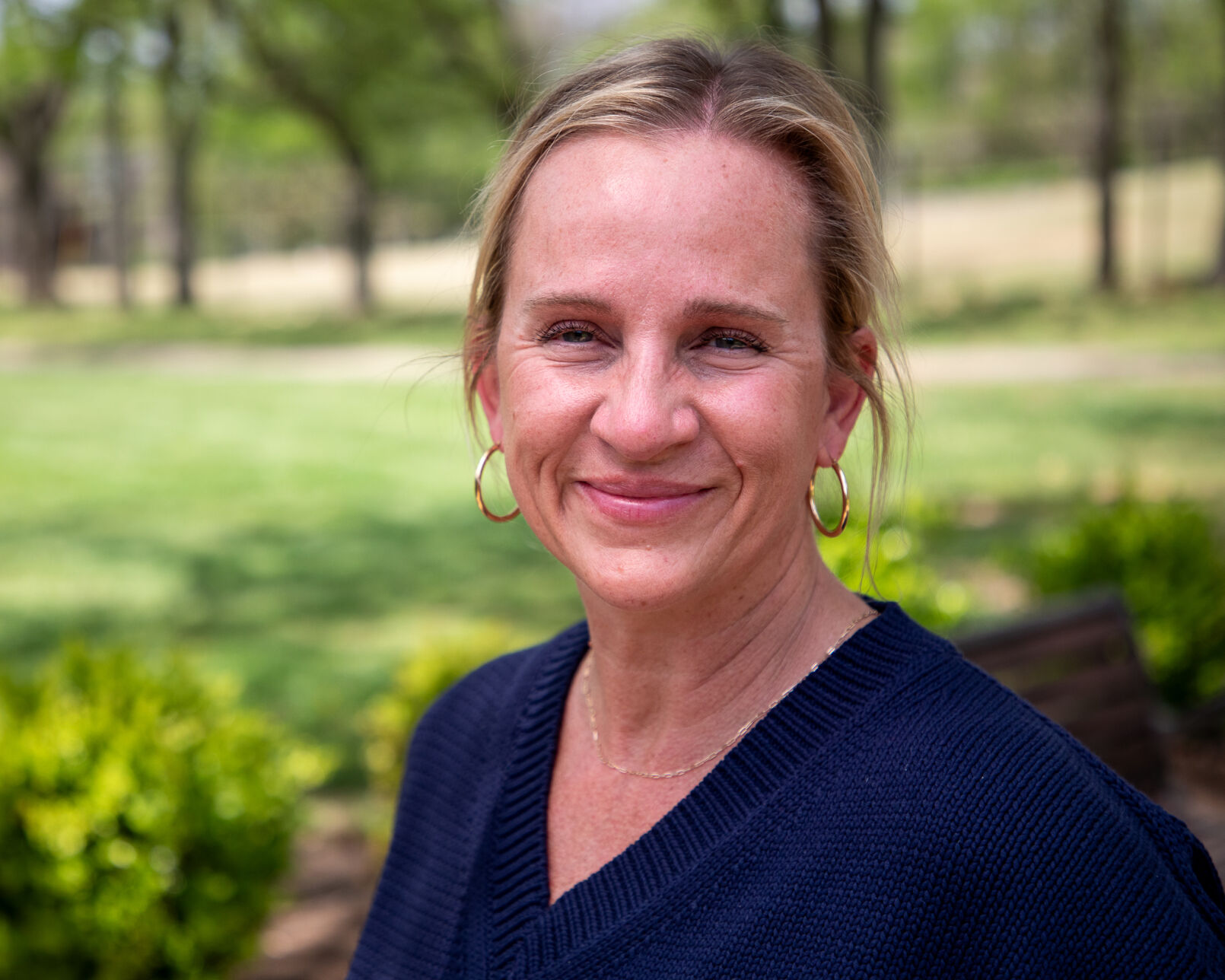
Candice Ashburn, a Williamson County mom, stands for a portrait in Brentwood, Tenn.
The worry for special needs children
Back during the 2025 special session to get vouchers on board, Rep. Chris Hurt, R-Halls, filed an amendment that private schools couldn't discriminate against students with disabilities.
That failed.
Candice Ashburn — whose special needs son attended Brentwood High School — visited the legislature to speak on that very issue. She said that with the expansion of vouchers, the issue still isn’t addressed.
“The thing about the sweeping legislation that happened this year, it’s discriminatory,” Ashburn said. “Period. End of conversation. I spoke to a lot of that with my testimony. I live with my child with Down syndrome. The accountability to the Individuals with Disabilities Education Act is enforceable, and they may have individual education plans, but it’s not the same as an Individualized Education Plan. Public schools are the only place that cannot turn a child with a disability away, and based on a number of criteria, they are entitled to a free education.”
Ashburn said she worried that an additional $300 million spent on the Educational Freedom Scholarship program could inadvertently take away from public school dollars to help those students like her son.
Williamson County Schools has a 9 percent disability population, while the Franklin Special School District has a 12 percent population. Both of those figures came from the Comptroller's Research and Accountability Office.
“When you’re pulling funds away as many hundreds of millions to the vouchers, I think you’ll see special education impacted negatively,” she said. “There are more IEP students entering schools but we have to fight for every bit we have for it now. Special education teachers are under-resourced. Some students with disabilities need more behavior management.”

Kelly Phipps sits for a portrait after expressing her opinion on Education Freedom Scholarships.
From a public educator's perspective
Kelly Phipps — an occupational therapist for Metro Nashville Public Schools — has seen it all.
Like other parents in Williamson County, she moved her family to the area specifically for the schools despite teaching in the district north of her.
“I am not opposed to school choice in principle,” Phipps said one afternoon after school. “I am opposed to publicly funded programs that operate without accountability, transparency or evidence that they are serving all students well.”
Phipps has seen students come from private schools and need intervention, one piece of the education puzzle she wished lawmakers would understand.
“Are they getting that? Who's making sure that the standards are being met?” she asked.
With more scholarships being offered, Phipps said she doesn’t blame anyone for doing what they think is best for their child, but does caution that they could end up right where they started.
“I do not believe in any way, shape, or form that any parent makes this decision. I think that there are a lot of promises made by these institutions, and I have seen them firsthand, where parents are like, ‘Gosh, they're having a really hard time. So maybe one of these specialized private schools that are in the area are going to be like the answer?’ And as it turns out, it’s not the answer they wanted and they have to switch their child back to public schools.”

Commented
Sorry, there are no recent results for popular commented articles.