
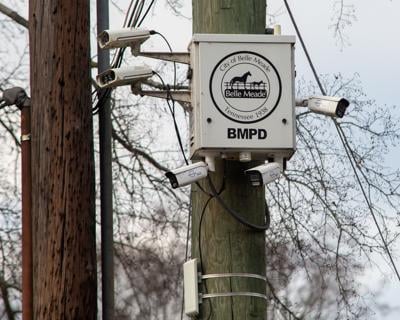

The Nashville Metropolitan Council passed the adoption of a license plate reader pilot program during their Dec. 6 meeting which will now see the Metro Nashville Police Department implement the devices across the city for six months beginning in early 2023.
The cameras, also known as Automated License Plate Reader/Recognition (ALPR) systems, use artificial intelligence to quickly read multiple license plates at one time in an attempt to match those license plate numbers with any plate numbers that have been entered into law enforce databases, typically aimed at curbing the use of stolen vehicles.
The pilot program was approved 22 to 13, with Councilmember Sharon Hurt, who this month announced her bid for Nashville Mayor, abstaining from the vote.
The pilot program is expected to begin in Spring 2023, after which the council will determine if the cameras should become a permanent addition to the city.
While the program was approved, exact details, including who the LPR vendor will be and the number of LPRs that will be installed throughout the unknown locations in the city, were not a part of the meeting and vote.
The lack of those details and the unknown impacts of the pilot program drew criticism from some council members, including from the youngest member, District 30 Council Member Sandra Sepulveda.
"I honestly don't know what we are doing here," Sepulveda said. "We are about to approve this without knowing who we will be contracting with -- Does that not sound alarming?"
Numerous residents spoke for and against the program during the public comments section of the meeting, including several law enforcement officials such as MNPD Chief John Drake, who supports the use of LPRs, calling them a "game-changing technology."
"I could go through and name incident after incident after incident where license plate readers would have helped," Drake said, vowing that MNPD would only use the technology to identify suspects in a variety of crimes from street racing to carjackings, homicides and other violent crimes, to finding missing persons.
"We have no interest in using them for any other purpose other than what I've stated," Drake said.
Dozens of privately-purchased LPR cameras are already in use in Davidson County, often by neighborhoods and home owners associations. LPR camera systems are also already utilized by multiple law enforcement agencies across Tennessee.
"License plate readers are already deployed in the Mt. Juliet area and those license plate readers from Wilson County have helped Nashville solve crimes," District Attorney Glenn Funk said. "License plate readers are also already deployed in the City of Belle Meade in Davidson County and those license plate readers have helped us solve crimes."
Public comments against the pilot program focused on public transparency with regards of the private vendors who would supply the devices, infrastructure and data to the city, growing concerns over privacy, the accuracy of the devices, and the potential threats to marginalized communities.
"There is a high degree of uncertainty about which vendors are buying to supply MNPD with LPRs given where MNPD is in the procurement process," Metro Nashville Community Oversight Board Executive Director Jill Fitcheard said. "Vigilance Solutions, Rekor and Flock Safety are all popular options locally, each of these vendors, however, come with different risk approaches to public safety and cost."
"Removing the requirement that awarded vendors provide presentations is a denial of a public voice in the process that already has limited opportunities for feedback," Fitcheard continued. "While the MNPD is fulfilling their legal obligation by hosting this public hearing on the LPR program, it is impossible for the COB to determine whether the MNPD policy will contain sufficient safeguards for the public. We have not seen any policy outlining how LPRs will be utilized by the department, and we're told that such policies may not even exist."
The exact number of LPRs used in the United States is unclear, but Marketplace, a Minnesota Public Radio program, reported that in 2013, LPR systems were in use by 90% of police departments in cities and urban areas with populations of over a million people.
"It's very unwise to put in place the infrastructure to expand surveillance and facilitate the collection of community data when we can't guarantee or safeguard how this information is going to be used in the future," Tennessee Immigrant and Refugee Rights Coalition Campaigns and Advocacy Director Judith Clerjeune said.
"It's impossible to know what the state or other actors will try to do with this information once the infrastructure is in place and the data has been collected. We need [the] Council to continue to focus on providing support for our community, so that they have the resources they need instead of dangerous surveillance networks. We want safer communities; we need more well-resourced communities, not more surveillance."
Nashville Mayor John Cooper released a statement following the vote citing increased rates in automobile and firearm thefts for his support of the program.
"License Plate Readers are a proven technology that will allow us to solve serious crimes faster," Cooper said in part. "I applaud Council for moving forward with the six-month pilot program set to launch this spring that will deploy this new tool and apply significant safeguards to protect residents’ privacy and civil liberties."
Commented
Sorry, there are no recent results for popular commented articles.