

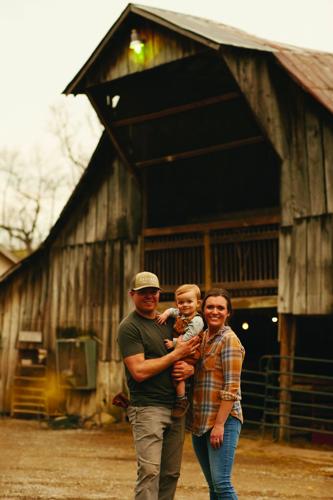


Cows at Hatcher Dairy
AGRICULTURE. It’s stamped in big letters in the middle of the Tennessee state seal, and it's been a part of life in Williamson County since it was founded. As the population has boomed, farmland has been depleted through the years and the once rural county is now largely a suburban area, despite all the local historic preservation efforts.

The county has always maintained a strong connection to its rural roots and there have been protections, such as land trusts and zoning codes, to maintain local farms.
Hatcher Dairy is one legacy farm that has outlasted the changes over time. Charles Hatcher, a sixth-generation dairy farmer points out, while he wasn’t sure of the exact statistic, there were around 70 to 80 dairies in Williamson County 50 years ago and now there are just two.
“It's a 200 year legacy, and farming is not easy,” Hatcher says. “It's literally a way of life. … I do some self reflecting sometimes and think about my ancestors that worked the farm before me. I think about my great granddad that served in both world wars and went through the Great Depression and was able to keep the farm going and hang on to it. So that's pretty impressive, and I have to remind myself of that a lot.”
Hatcher says each generation has made its own mark on the farm through different upgrades and changes. The Hatchers have diversified their business doing more direct to consumer sales, tours and field trips in addition to their wholesale production.
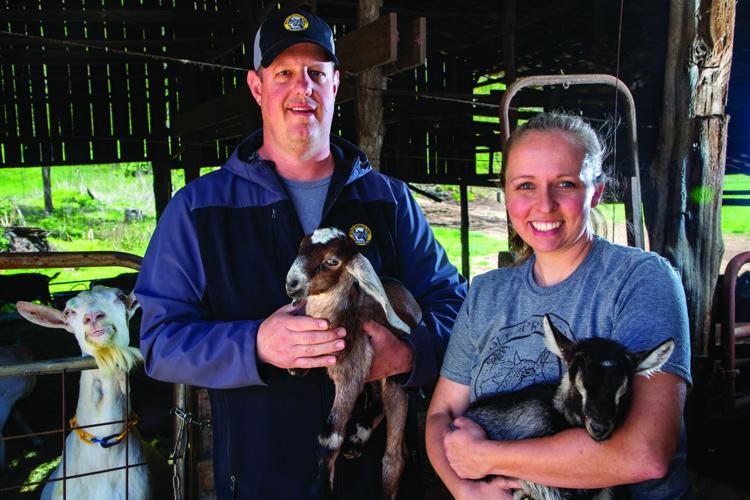
Dustin Noble, like Hatcher, grew up locally, too, and he agrees, the farms are dwindling. Noble and his wife Justyne manage goats and produce milk and cheese on their land — Noble Springs Dairy. They also open the farm up on Saturdays for the public to come view their operations.

Dustin and Justyne Noble
“When I was a kid, there were a lot more farming operations around,” Noble says. “In this county, everybody kind of has to find their niche, how to fit in and how to adapt to the changes. The tour is a part of what we do. It’s our adaptation to capture some more business because of the growth and the interest in agriculture.”
The Nobles say their children are getting more involved in the farm experience and are starting to learn more about it. Hatcher recalls his childhood on the dairy fondly, saying that his choice to carry on the farm came naturally.
“I tend to do the same thing with my son, exposing him to it, letting him learn all about it,” Hatcher says. “I'm certainly not going to make him do something that he doesn't want to do, but I think he's already caught the bug at three years old. That boy sleeps and breathes John Deere tractors. … It's in his blood too. He gets it honestly.”
Hatcher says he sees a lot of himself in his son and he tries to create the special memories for him that his dad and grandfather did for him.
“Growing up on the farm, I've got awesome memories, tons of life lessons; you learn to love the land, prepare it for the next generation and love being outside, working outside,” Hatcher says “I haven't planned anything since 1987. I just wake up and react to the day. That's farming in a nutshell.”
Hatcher says that while he doesn’t like to see the farmland disappearing, lately people have started seeing more value in the local agriculture community.

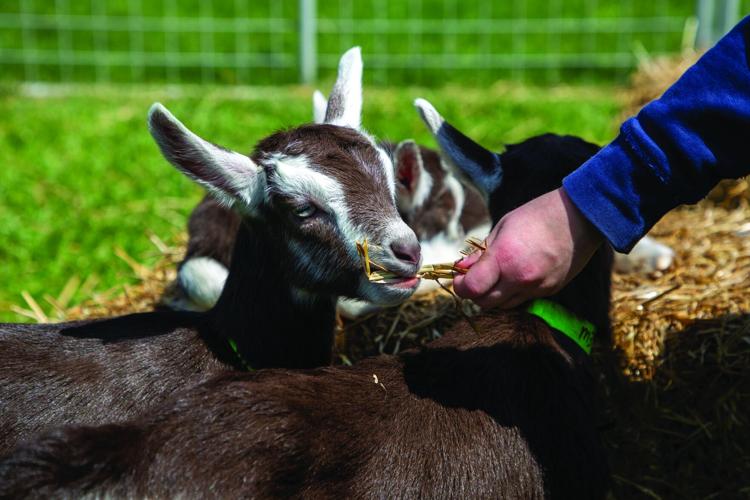
Goats at Noble Springs Dairy
“There's this kind of realignment with food supply and conscientiousness of where food comes from and the importance of that,” Hatcher says.
That “buy local, eat local” movement ebbs and flows, Justyne Noble says. She explains that since the beginning of Noble Springs Dairy in 2009 she and Dustin have seen changes in how larger grocery stores try to incorporate local products and while it's hard to gauge consumer trends they do take notice of how something like the ease of shopping online for organic foods could be affecting local store sales.
Hatcher adds that while the pandemic had horrible effects in many ways, one positive thing to come out of it was the way that people’s minds and hearts were opened to think about where food comes from instead of relying on grocery stores and distributors.
“I think that really opened up that window, and there's a lot of restaurants and food establishments that are now pledging to locally source foods, and that's important as well,” Hatcher says.
Seed to Fork

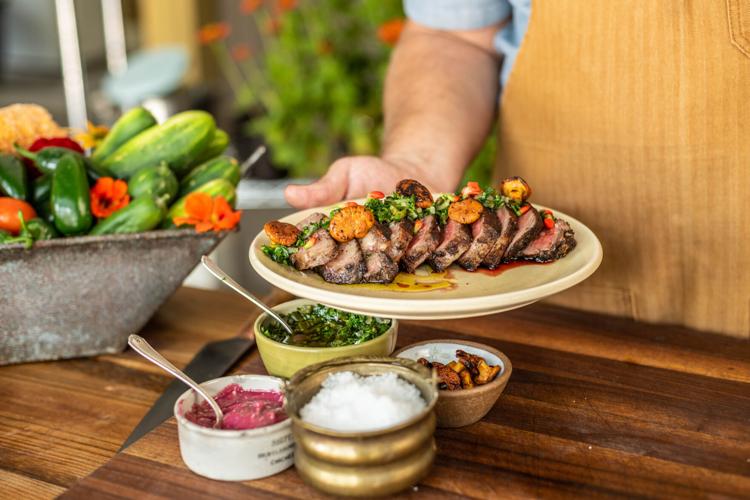
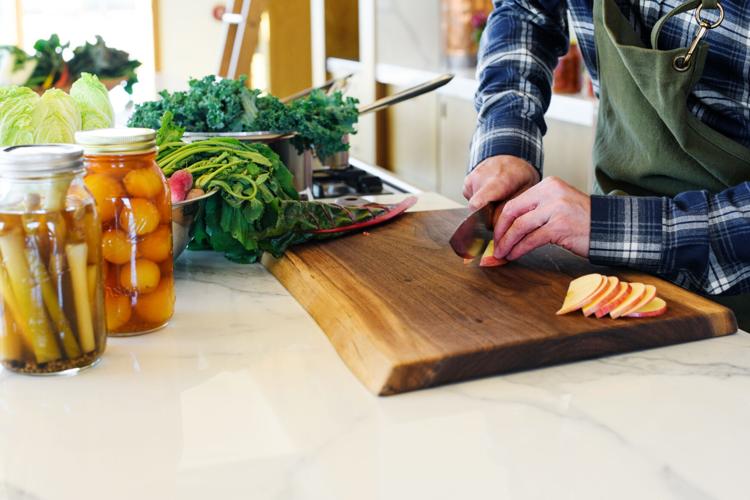
One place in Williamson County that’s doing this to an expert level are the restaurants at Southall. The chefs work directly with farmers on the property to cultivate the foods for their meals.
“[The chefs are] really able to offer something unique, which is that they can really commit to doing really diversified local-based menus, because they have direct access to the farmers,” Southall farm manager Alec Higgins says. “They can come to us and say, ‘There's this one specific kind of blossom that we want to have as a garnish on our salad,’ and we can produce that for them, because we're here in-house.”
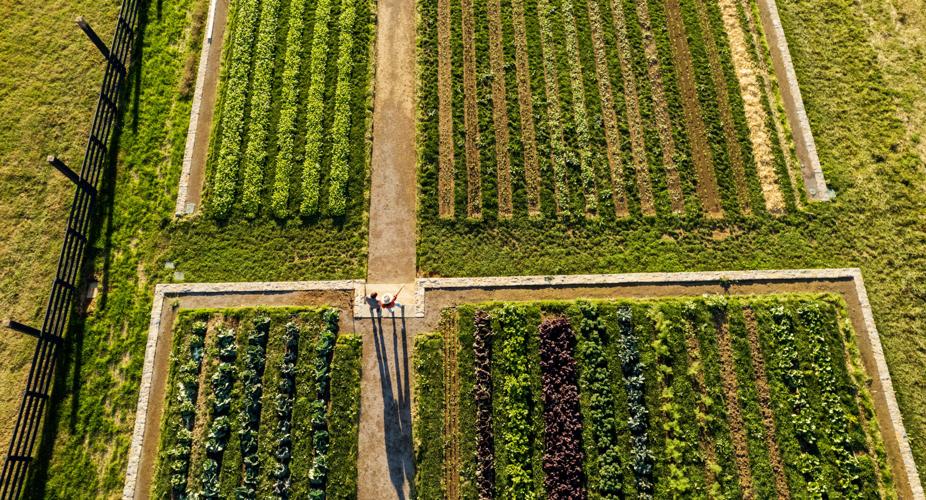
Higgins says Southall has a commitment to sustainability and ecological growing techniques that contribute to the food quality that people seek at the property’s restaurants. He explained how this past winter the team worked to reconfigure the main vegetable field on the farm to a deep compost mulch, no-till system.

“It’s a system that reduces the kind of mechanical abuse that you give to the soil and allows you to really develop the soil ecology to support the plants, and also long term, can reduce the weed pressure and we can moderate the temperature and moisture in the soil,” he explains.
While that’s the current focus, Higgins says he is looking to other parts of the farm such as the orchard for future changes to continue developing the farm’s sustainable practices.
“It's quite hard to grow just apples in an orchard here in Tennessee, because it's a difficult climate with pests and things like that,” Higgins says. “We're looking at diversifying that over time. And how can we use ecological methods to really take that production system to a more regenerative approach? Every year, getting a bit more regenerative with how we do it.”

In addition to the vegetables and the orchard, Williamson County hosts two greenhouses. Southall manages one, growing a variety of foods, including herbs and citrus trees. The other is managed by Greener Roots and grows leafy greens using hydroponics. Higgins says the farm also includes poultry such as chickens and turkeys.
“We're very lucky to be able to focus on growing high quality food here, which also allows us to do the most ecological practices, because the two tend to go hand in hand,” Higgins says. “When your customer wants the highest quality product, you're able to use the most ecological growing methods as well because they work together.”
Visitors do not have to be staying at the resort on the property to dine at either of the restaurants but they must make a reservation. And if community members want to try some of the Southall produce, Higgins says some of the extra is often sold at the farmstand on the property which is open to the public.
Agrarian Living

Many communities and developers are embracing more greenspace in their projects to incorporate the natural environment into the built environment.
“Some of these new developments and projects are making an effort to have more green space or a community garden, or agriculture production of some sort of capacity with these new projects,” Hatcher says. “It's needed. I mean, last time I checked, we all have to eat. That's kind of my take on it. As much as I don't like to see the farmland dwindling, I do like the new forward movement of at least getting more involved in an ag-focus with new developments and projects.”
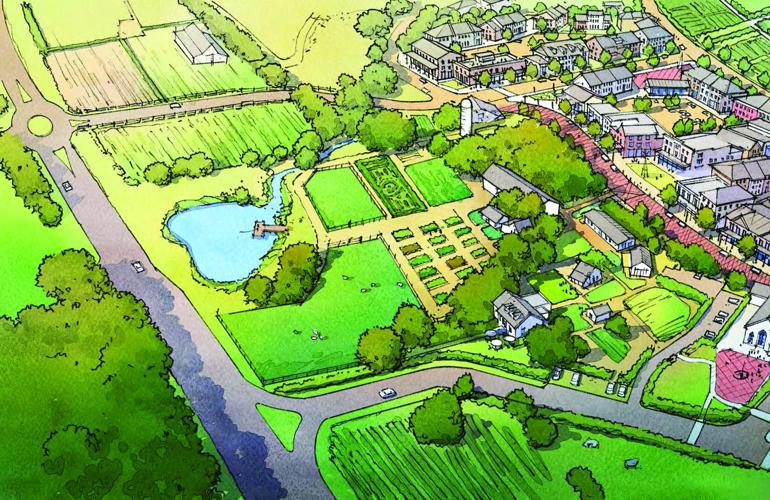
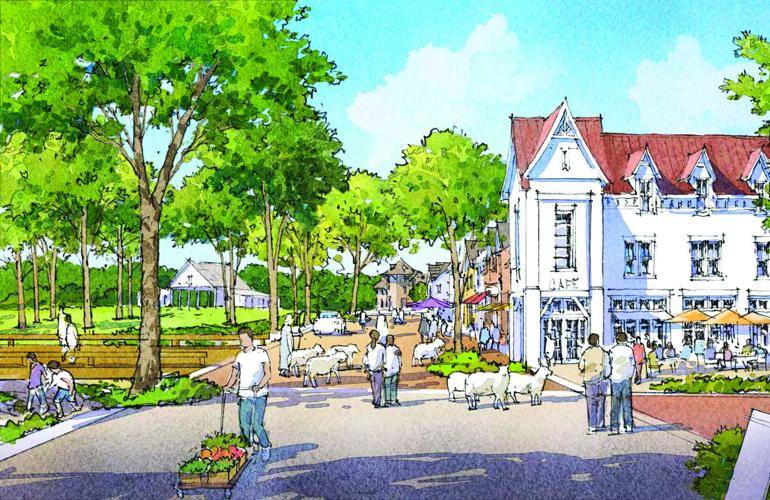
One of those projects is Armistead, a 200-acre “agri-hood” that is being built on the former Westbrook farmland owned by the Short family. The agri-hood concept is a master planned neighborhood centered around farming and agricultural living, which at Armistead will include crop and livestock production with areas like grazing pastures and orchards among residential and retail areas. Craige Hoover, founder of Ha Ha Development, says the family decided to sell, the Shorts were intentional about maintaining the farming legacy they had built on the property. Hoover’s company had just developed the Southall resort when he learned of the opportunity.
“I brought a unique recent experience to this sort of endeavor. And I called up my long-time friend and collaborator, Brian Wright of Town Planning and Urban Design Collaborative who has experience master planning these agri-hoods. He's done half a dozen of them, at least, in his career. … We came up with this concept, which we are going to be farming a lot, but it's more than that. It's really trying to be an agricultural hub, a resource for not just the farmers that are on our property, of which there will be many, but the farmers in the region.”

For this development, that means providing different levels of housing, including one-, two- and three-bedroom apartments, townhouses, single-family homes and even tiny homes and live/work units, so that the growth of the community itself is sustainable for people at every stage of life.
“The sheer demand for a diverse array of housing is something that Williamson County has struggled with for years and years, and is going to continue to struggle with it,” Hoover says. “And until we sort of normalize this missing middle … then, we take it as a responsibility to show the rest of the community that this can be done, and it can be done well, and it really is for the betterment of our community.”
He adds that this development model could be replicated at various scales for more rural areas that want to maintain their character and charm but need to accommodate a growing population.
“I would endeavor to say that this is going to be the most expansive agri-hood in the country,” Hoover says. “We're really taking the concept and expanding it to really weave it throughout the whole community and also just be a part of the overall ethos and not just a sort of a feature.”
Hoover also grew up locally and is passionate about contributing to the environment in a way that is going to leave it better than he found it. For Armistead, the Short family’s involvement in the development is key to the preservation of the land and the vision for the future. The property will offer a town center that includes a marketplace for fresh produce, restaurants with farm-to-table dining and be centered around the pedestrian experience so that people can visit local gardens.
And that’s just the beginning, Hoover says. He says the development aims to get the community to be involved “to demystify the small-scale agriculture” so that anyone can learn about farming and natural resources. Hatcher says that there has been a “resurgence” of interest in farming. And though people have been removed from previous generations who once worked on the land, they can return to it today because of the way agriculture has diversified.
“You don't have to have 200 acres and 100 cows to be involved in agriculture,” Hatcher says. “You can just have a raised garden bed in your yard, and that's agriculture.”