
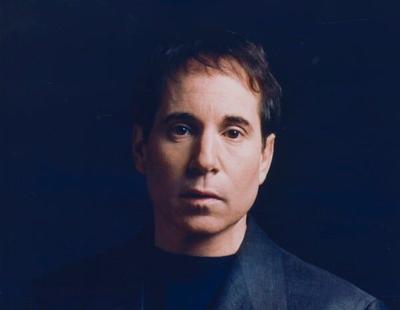
A silver-headed stream of Paul Simon fans marched uphill into FirstBank Amphitheatre this last week, eager to take their seats in the rocky, cliff-clad music venue to enjoy a night of music.
As the sun began to set a little past 8 p.m., Simon’s band began to walk onstage. Shortly after the band took their seats, a small, elderly Paul Simon trailed in, standing front-and-center in the midst of the orchestral band. Donned in a baby blue suit, Simon greeted the crowd.
“Thank you so much, thank you,” he said. “It’s lovely to be here, and it looks like we dodged some rain.”
As a prelude, Simon told the crowd that the performance would be split into two sections — the first, a performance of his 15th solo studio record, Seven Psalms, followed by a performance of a few of his greatest hits.
After the introduction, a hodgepodge of instruments began to perform the beginning notes of the seven track record, written to be played for a consecutive 33 minutes. The words of the first track, “The Lord,” appeared in a simple font on the screen behind the xylophone hums, twinkling percussion and entrancing guitar picking.
“The Lord is the face of the atmosphere,” Simon sang out to the crowd. “The path I slip and I slide on / The Lord is a virgin forest / The Lord is a forest ranger / The Lord is a meal for the poorest of the poor / A welcome door to the stranger.”
Moving in between complex orchestral instrumentation and simplistic strumming patterns, Seven Psalms continued through the entirety of the record. Simon is known for his cinematic storytelling and brilliant lyricism, and his last studio record is no different from the worldly sounds and deeply human narratives embedded in Simon’s extensive collection of work.
Grammy-nominated Seven Psalms, specifically, is a poetic call to some sort of spirituality, circling themes of faith, loneliness and morality through song. The record moves through advanced metaphorical ideas, using worldly experiences as a way to come to terms with aging, religion and the great beyond. Entrancing the audience, many who were older fans, Simon’s performance of Seven Psalms felt heavy, insightful and luminous.
After a short intermission, Simon and his band returned to the stage for the second set, a more casual, laid-back performance of hits. Wearing a tan baseball hat, lavender button up, light-salmon T-shirt, and jeans, the upbeat and rhythmic first notes of “Graceland” filled the amphitheatre.
As soon as the words “The Mississippi Delta / Was shining like a national guitar” poured from Simon’s aged yet still powerful voice, he was met with immediate applause and a chorus of voices chanting the words from the 1986 hit.
Moving forward with the set, Simon plowed through hits such as upbeat folk anthem “Homeward Bound” from his Simon and Garfunkel repertoire, the emotional and sincere “Father and Daughter” and “The Late Great Johnny Ace,” which Simon dedicated to the late '50s American rhythm and blues singer of the same name.
“Johnny Ace had one big hit that I really loved. It was called ‘Pledging My Love.’ On Christmas Eve 1954, he played a sold-out show in Houston,” Simon told the crowd before performing the song. “Then after the show, he came back to his dressing room. He was hanging out and fooling around with a pistol that he used to carry, and pretending to play Russian roulette. Well, he accidentally killed himself, and I heard about it from the DJ the next day on the radio and his words were, 'And now we’re going to play the number one song in the country, by the late, great Johnny Ace.’"
After concluding with “Diamonds on the Soles of Her Shoes,” Simon and his band walked off stage, only to return moments later with an encore of rapid-fire hits like plucky folk song “Me and Julio Down By the School Yard” and the joyous, jazzy “50 Ways.”
At the very end of his set, Simon’s band walked offstage and left the 16-time Grammy Award-winning songsmith with just himself and his black guitar to perform the very last two songs of the night.
He plucked away at the melodic first few notes of “The Boxer."
Simon ended his set with “The Sound of Silence,” strumming three last deep chords and taking in the standing ovation. He beamed proudly, thanking the audience over and over for their time and their dedication to his music he’s written, performed and poured his life into since 1956.
Commented
Sorry, there are no recent results for popular commented articles.