
It’s not just about the food. Farmers, entrepreneurs, ranchers, mixologists, chefs and boutique owners all have a hand in creating the Williamson County’s culinary scene. Meet three of the region’s most creative tastemakers.
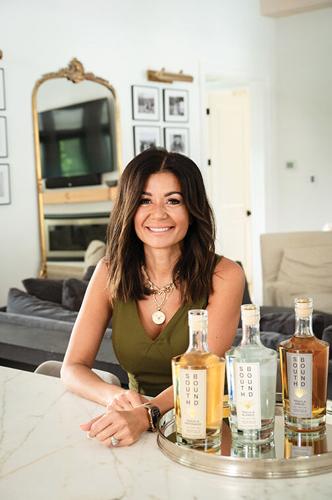
Ivey Childers, CEO of Southbound Tequila
While Ivey Childers’ company, Southbound Tequila, was founded in 2022, Childers has been essential to the Williamson County food scene much longer. In 1999, she was fresh out of college, working in ladies dresses at Dillard’s and trying to decide what she wanted to do next. She opened a cookbook and decided to make a cake from a Martha Stewart recipe.
“It was just an awful cake,” she remembers. “I was very surprised, being a rule follower and I followed a recipe that just didn’t turn out great.”
But that mistake opened up a world of curiosity for Childers. She dug in. She started making cakes from scratch, willing to toss out batter that wasn’t working, willing to embrace trial and error. Before long, she was known for her cake recipes. She developed not one recipe but 40 (“Why not?” she says). People started asking for her cakes and by 2007 she opened IveyCake, a dessert business so popular it led her to make Carrie Underwood’s wedding cake and Katy Perry’s birthday cake, which was on the stage at American Idol.

Ivey Childers, CEO of Southbound Tequila
As the years went by, her role at IveyCake turned more toward running the business and became less about being creative. Her creativity manifested in other ways.
“I would come home and I would create cocktail recipes, because the similarities and balance when it comes to baking and creating cocktails was the same, in that it was about exactness,” she says.
She’d make cocktails for her friends and family, but she couldn’t get the tequila drinks just right. Either she used a budget brand, and then she had aftertaste and next-day aftereffects. Or she used a premium bottle that was only affordable for special occasions.
You can see where this is going. She went to Mexico to learn more about tequila making, and then she created her own brand. In 2019, she sold IveyCake to one of her former employees, now located in Brentwood. And Childers found a distillery to work with in Mexico, and launched Southbound Tequila.
“Southbound is everything that I was looking for,” she says. “It’s a high-quality sipping tequila that you can offer to anybody who loves to sip tequila straight. But it has a very intentional profile that plays well with other flavors, meaning that it will balance out a cocktail, especially if you’re making the cocktail correctly, which is where I come in and help,” using her background as a recipe developer, first with cakes and now with cocktails.
The Southbound website is loaded with her recipes, from a s’mores martini to an Aperol sour to a negroni.
“Countless people have trusted me with their big public celebrations and private child birthdays. I was really lucky to have the attention in Music City and that followed into the curiosity,” she says. Tequila wasn’t random. It was a deep part of my story and creative passion that rolled into another chapter of entrepreneurship.” — MARGARET LITTMAN
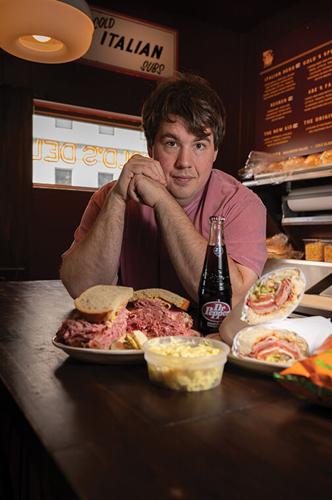
George Kougias, founder and owner, Gold’s Deli
When you ask George Kougias about his Gold’s Deli, which in its first year became a foodie darling, he’s modest. “It’s just a food truck you can sit at,” he jokes about the 300-square-foot space in the Row & Co. building in Columbia. His marketing materials claim that the sandwiches are bigger than the seating area.
While Kougias can’t resist a joke — he worked at Zanies in Nashville for years — he is serious about sandwiches. He makes some of the region’s best, piled high with pastrami, corned beef, turkey and ham. Food costs are high, he acknowledges, as he uses quality meats and provides (more than) ample portion sizes. But his business philosophy is simple: “Give people a little more than what they pay for, and they’ll come back.”
Come back, they are. Until recently, the restaurant was open six days a week (closed Tuesdays) and often sold out because Kougias works on what he calls “the barbecue model.” He only preps a certain amount of meat daily, and once it is sold out, it is sold out until the next day. (See what we mean about him being serious about sandwiches?) Customers and staff alike wanted more (both sandwiches and hours) and Gold’s is now open seven days a week.

George Kougias, founder and owner, Gold’s Deli
While the neighborhood is officially the Columbia Arts District, Kougias calls it the food district, noting he is near Mama Mila’s, Savarino’s Market, Bag of Joy Bagel Co. and Bradley Mountain coffee bar. Within the next two years, he predicts, it will be hard to find real estate for a restaurant in town. He’s grateful that he was able to get in when he did and that locals have responded so well to his basic, but not at all boring, idea for a sandwich shop. In addition to lunch orders, Gold’s Deli offers catering for parties and meetings.
Because the shop, with its mid-century modern sensibility, has just six stools, customers sit or stand and talk to Kougias while he crafts and carves their lunches. Now that he has staff to help, Kougias has noticed his employees repeat much of his banter and narrative when they are behind the counter. “They are almost like parakeets,” he says. One employee is a huge basketball fan, and Kouigias is thrilled to have someone to talk to customers about the sport since he is not a big fan.
And for those for whom Columbia is a little too far to drive regularly for a sandwich, Kougias has a satisfying tidbit: He’s looking for a second location in Franklin. Again, less than 1,000 square feet, where it can be warm and cozy and where the sandwich is the star. — MARGARET LITTMAN
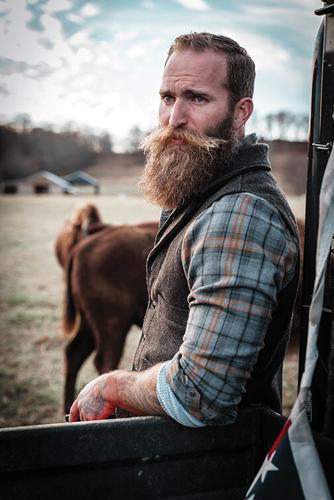
Daniel Johnson, owner of Bullbourne Bison
Bullbourne Bison was born from Daniel Johnson’s dream to raise his kids on a ranch. A formative viewing of Dances With Wolves made him dream of raising bison on that ranch, too. The result is a rapidly growing ranch on a sprawling piece of land about 45 minutes south of Williamson County in Cornersville, where Johnson’s herd has been steadily growing since 2010. That first purchase of nine bison quickly turned into a herd of 150-200 animals, all grazing freely on Tennessee grass in Tennessee pastures, a rarity since they were overhunted in the 1800s.
When he began raising bison, Johnson’s passion far outweighed his agricultural knowledge and experience. He started modestly with a fence: He learned how to build fences and fenced in his property, which led to a buying a bulldozer (“Did you know they don’t require any proof of experience to buy a bulldozer?” he asks), followed by building his own barn and launching an agricultural construction company on the side. By the time he completed building up his property, it was time to introduce the bison.

Daniel Johnson, owner of Bullbourne Bison
Johnson quickly learned that bison aren’t the easiest livestock to raise.
“Raising bison in Tennessee comes with a stack of difficulties,” he says. “At the beginning, I thought you could just put bison on a field, and they just eat grass.”
Turns out they’re picky eaters, with high sensitivity to parasites and other conditions. With the help of a mentor, fellow bison rancher Fred Nance, Johnson navigated challenge after challenge. He found an expert in parasitology at Texas A&M, and a nutritionist in Montana, and developed his own strict farming practices to keep his herd healthy.
“We feed [the bison] just like you would feed a professional athlete,” he says, monitoring their intake of protein, fat, and carbohydrates each day, changing their feed with the seasons.
It’s a painstaking, constantly evolving process in the pursuit of the very best product available. Unlike many bison products on the market, Johnson wants his to stand apart for their flavor, not just as a health food alternative to red meat. To do this each cut of bison meat is dry-aged to concentrate the flavor. “I want this to be like Wagyu,” Johnson says, “A culinary experience.”
He’s also focusing on food experiences that showcase the care that goes into his bison, and that of other local purveyors. Beyond selling meat online and at farmers markets, it’s one of the best ways to showcase a product that isn’t — and can’t be — processed in mass quantities. For example, each bison produces 16 filets at eight-ounces each; Bullbourne currently processes 104 bison per year.
As Bullbourne Bison grows, Johnson plans to expand the experiences on the farm and opportunities for people to enjoy his bison — on the plate or in person. It’s Johnson’s goal to leave his stamp on the world by reintroducing bison as America’s native meat. — ELLEN FORT


Commented
Sorry, there are no recent results for popular commented articles.