
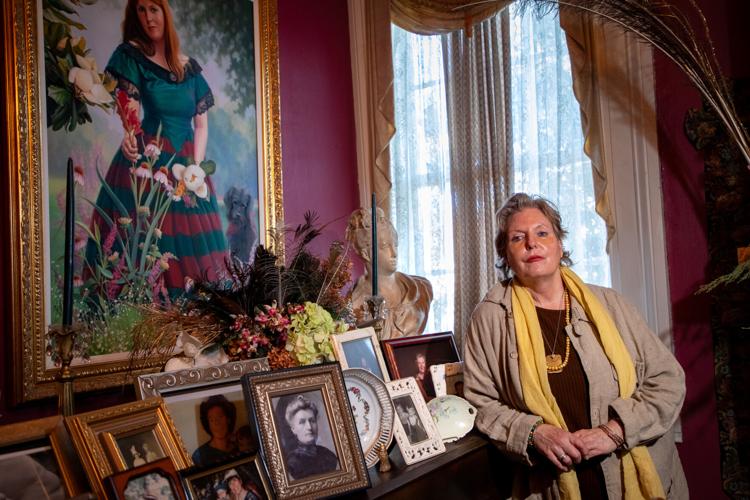
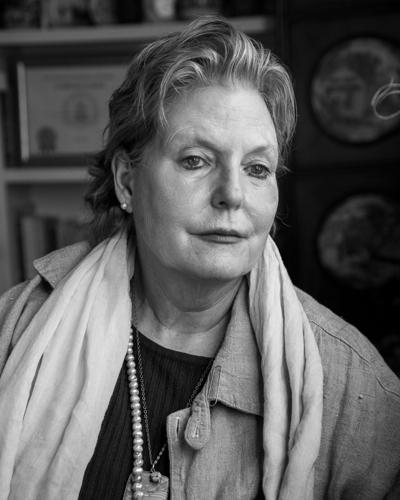

Pam Lewis does well with a deadline.
Her latest deadline was Benjamin Franklin’s birthday, Jan. 17. She, along with members of the Daughters and Sons of the American Revolution, the Williamson County Museum and Archives, and other community members, debuted a statue in his honor, kicking off a yearlong celebration of the United States’ 250th anniversary.
Lewis footed the bill for the statue, and with it debuted two books she wrote about the founding father — Benjamin Franklin: America’s First Rockstar and Ben Franklin Visits Franklin for a Day.
“It was the happiest day of my life, looking out and seeing people smiling and all ages getting excited about our town, getting excited about our shared history,” she tells Williamson Scene of the day the statue was unveiled.
When Lewis found out Franklin was named after Ben Franklin years ago, she wanted to honor him and felt a statue was the most permanent way. Six months ahead of his birthday, she met with the local Daughters of the American Revolution chapter — which was working on a similar effort — and helped expedite the process. Lewis had the money from her eponymous foundation, through which she gives to “various things that I get excited about,” she says.

Pam Lewis wears a paperclip on her lapel, a historic anti-Nazi symbol
“I wanted people to stop for a minute, to maybe ponder, to maybe think ‘I'd like to read more about Franklin the man,’” she says. “Or ‘I'd like to read more about Franklin, the city. I'd like to get involved. Let's bring our friends, let's take a picture.’”
Ben Franklin is just the latest object of interest for Lewis, who founded PLA Media and is credited with launching the careers of Garth Brooks and Trisha Yearwood, among others, in the music industry. She also served as an at-large alderman in Franklin from 2003 to 2007.
Lewis’s first book, A Tennessee Yankee, was written in honor of the 150th anniversary of the Battle of Franklin and focused on the historic Harrison House, a site of major Civil War history that she purchased.
“If I had just bought a house in a subdivision somewhere, I would not have met all these people,” she says. “I would not have run for office. I would not have gotten more involved in preservation work. It was life-changing, buying this house, moving here … It has brought me great happiness.”
She wanted her Franklin books to be fun, rather than carry an academic tone. She knew the “normal stuff” that people knew about him, like the discovery of electricity, the printing press and bifocals. She watched the Ken Burns docuseries on the founding father and continued her research from there.
Lewis learned that Franklin also played music, and even invented some instruments. She related to his love for travel, and admired his intelligence and impact despite completing only two years of formal education. She’s not seeking to idealize him, but rather, take the best ideas he had and apply them to life today.
For example, as when Franklin said, “Justice will not be served until those who are unaffected are as outraged as those who are."
“The more I dug, I’m like ‘oh my God, this guy is killer,’ " she says. “Was he a ladies' man? Yes. Was he a great dad? Not so much. Was he a great husband? Definitely not. He was enigmatic. He was a flawed person, sure. Aren't we all? But we still talk about him.”
Like many Gen Xers, Lewis has fond memories of America’s 200th anniversary. She’s hoping the January event was just the start of the America 250 events — perhaps kite flying, a Benjamin Franklin lookalike contest and parades are still to come.
Writing the books was a way for Lewis to do something for herself after spending much of her career promoting other people’s dreams. Following a near-death experience, it feels like her time to keep a promise to herself, she says.
“I'm in a place in my life where I don't have kids … how can I leave a legacy?” she says. “I want to give back, and Franklin has been good to me. They've adopted me as their own.”
On the day she spoke to the Williamson Scene, she had given out copies of her book to families she had run into on the street.
“Even though we have almost 100,000 people here, there's still this synergy that happens if you're involved in the community, if you put roots down, if you volunteer,” she says. “You still have this sense that people care about each other, that this is something to be proud of — this is a place that we have to protect, and that, to me, is a very beautiful thing.”