
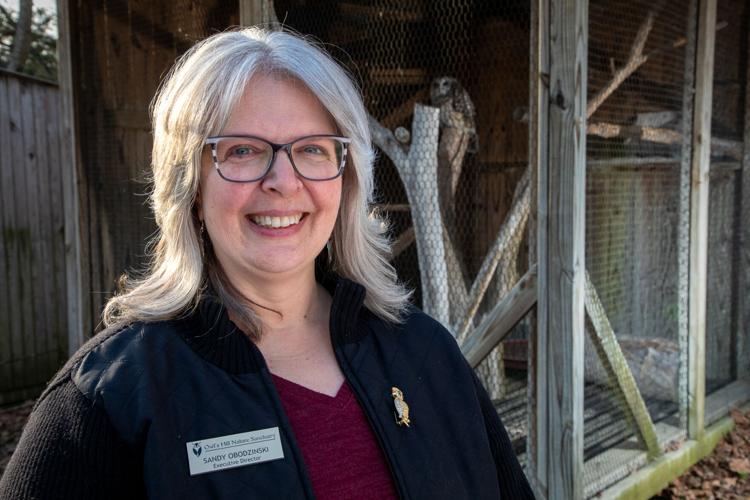

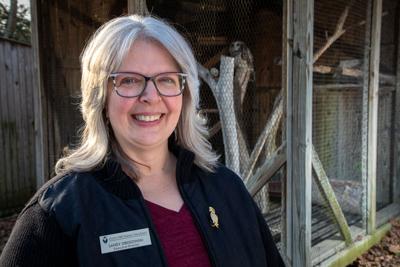
Sandy Obodzinski still remembers a 2014 nighttime "owl prowl" at Owl’s Hill Nature Sanctuary in Williamson County.

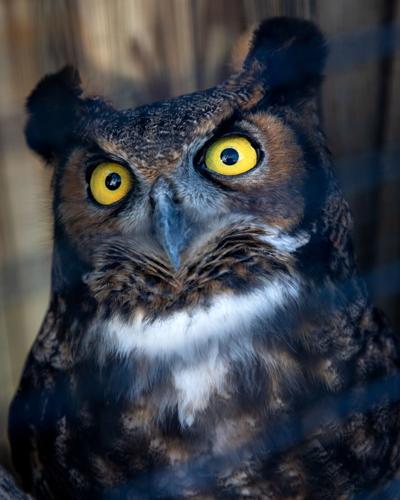
Boomerang, a great horned owl living at Owl's Hill Nature Sanctuary
“We were just a group of 25 people standing in the forest, in the dark, in silence,” she says. “[The tour guide] does a barred owl call. And we wait; a minute later, he does another one.”
Then an owl called back — just one of the many in the wild on the property. She gets chills just talking about it.
“I think everybody who comes out here has those moments — they’re not going to forget it,” she says.
As the new executive director of the sanctuary, Obodzinski is driven to help others create such a connection with nature.
Before she took on the top role in August, Obodzinski had been a board member with Owl’s Hill since 2021. She’s worked in nonprofit for 20 years in Middle Tennessee, including at Portara Ensemble, Gilda’s Club of Middle Tennessee and most recently, Humanities Tennessee. Her work at The Nature Conservancy philanthropy most closely resembles Owl’s Hill, but it was much less, well, hands-on.

While the sanctuary doesn’t rehabilitate animals, wild animals can be released there. She arranged for the release of a fox from Walden’s Puddle last week. (“It was pretty magical,” she says). Sometimes, she’s called upon to feed thawed mice to one of the four owl ambassadors that live on the property.
“You always have to have hiking shoes and bug spray, because even if you went to a meeting and you have to be dressed up and out in the world, you come back here and maybe you've got to back the tractor into the barn, take somebody on a hike … whatever the case may be,” she tells Williamson Scene.
At the very least, none of her previous offices had a pet pigeon that accompanied one of her employees to work each day. Obodzinski was thrilled that Indy perched on the back of her office chair on the day the Scene visited.
“Every day is an adventure,” she adds. “You don't know what's going to happen day to day. You don't know what phone call you're going to get, what question you're going to get.”
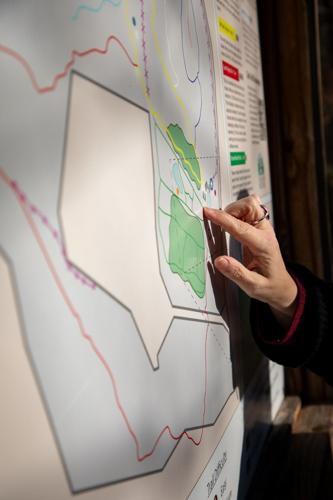
Owl’s Hill is open six days per week and welcomes 10,000 visitors per year. A $5 day pass gets visitors access to five miles of trails, an orchard, a meadow and whatever else they find on the sprawling property. Hundreds of local students per year cycle through the teaching barn for animal demonstrations.
Huldah (Cheek) Sharp (of Cheekwood affiliation) was the original owner of the 140 acres of land, which passed through several hands until the then-newly formed nonprofit Owl’s Hill took charge in 2007. The organization was also recently gifted another 160 acres from the Sugg family, on which it plans to add additional trails. The campus plan will include a crackdown on invasive species, an overhaul of parking and the visitor center, as well as the addition of accessible trails for those with disabilities.
“It's one thing that this 300 acres is protected,” Obodzinski says. “Of course, that's good. There's not going to be housing developments and all of that, but it can't stop at protection, because you also then have to manage that protected space so that it can be healthy, that it can thrive, that it can be resilient.”
More parking will allow for more visitors, but they hope to keep it quieter and more intimate than public parks.
“There is a specialness out here that is, in part, preserved because we don't have 1000 visitors a day,” she says.

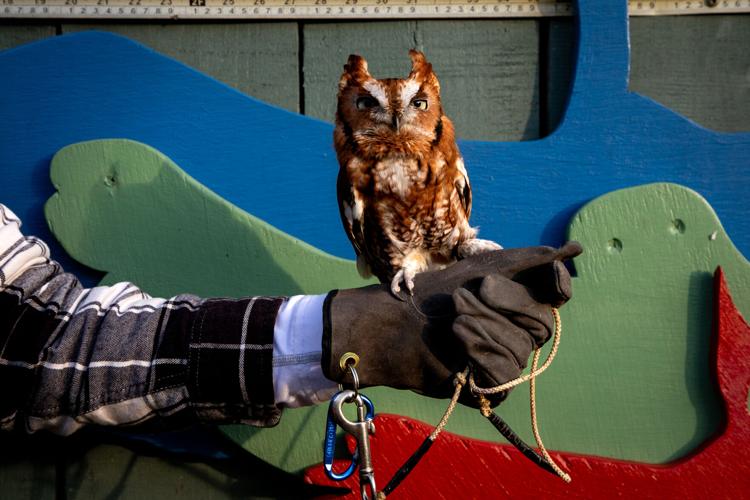
Annie, an eastern screech owl, at Owl's Hill Nature Sanctuary
Visitors can greet two great horned owls, Louie and Boomerang; the eastern screech owl Annie; and Shakespeare, the barred owl. Each of them cannot be released in the wild, either because they are injured, or they have imprinted on people and see them as their source of food. Inside lives Squiggly Nelson, the eastern corn snake; Sherman the eastern box turtle; and two millipedes, Maxine and Maxwell.
This winter, Owl’s Hill offers marshmallow hikes for families, which end with hot chocolate and roasted marshmallows. Obodzinski hopes it could ignite a lifelong love of nature or even a career in it.
“We're planning literal and figurative seeds here that we'll never know what they became, but it really matters that we do it."