



When a city decides it’s done maintaining a cemetery, it often fades into obscurity and ruin. Though citizens can take on the maintenance, it can be difficult to keep up with the costs. The Spring Hill Cemetery Association has come up with a unique way to fundraise — bringing the cemetery to life.
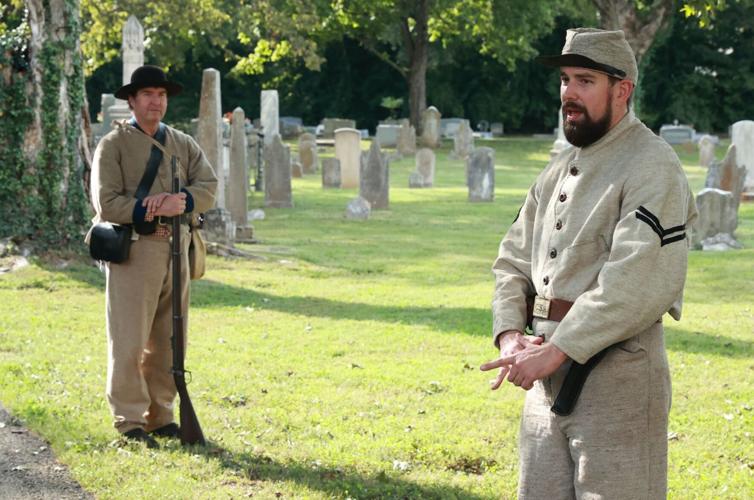
Mike Hoover, president of the Spring Hill Cemetery Association, has been reenacting for nearly 30 years and has been running the cemetery board since 2017. His experience in the field, combined with a knowledge of local history, led Hoover to turn the cemetery into a living history tour in 2020.
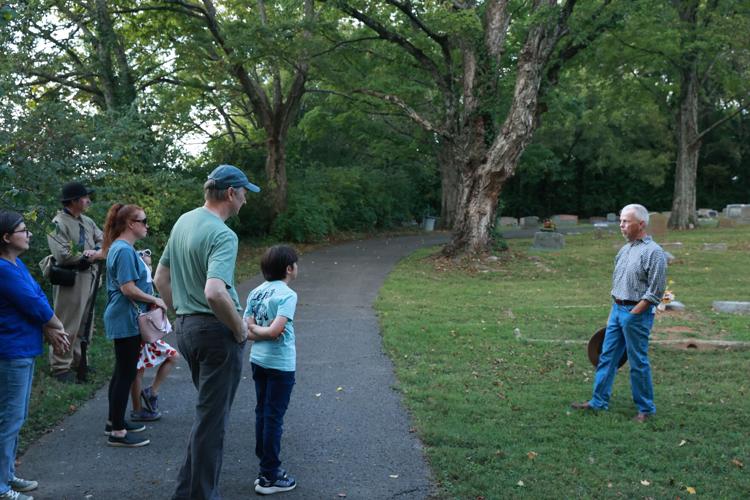
Occurring twice a year, the tour is set up so that visitors can meander through the headstones, stopping to talk to volunteers dressed up as those buried in the cemetery. Many of the volunteers are members of Hoover’s reenactment group, the Williamson Grays.

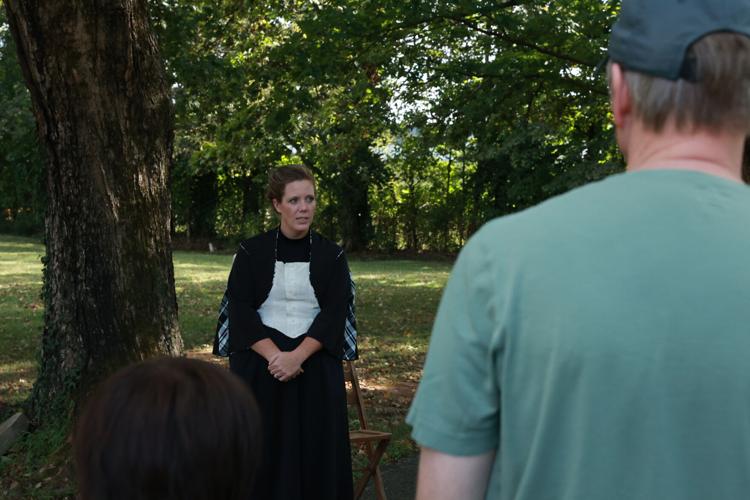
Irene Cheairs, portrayed by Kortney Braus
The tour acts as a fundraiser, helping the board maintain the cemetery. According to board member Barrett Severance, it takes more than $6,000 just to cut the grass each season.
Spring Hill Cemetery was a part of the Battle of Spring Hill. Hoover opened the tour by telling visitors not only about this part of the cemetery’s history, but also its recent history and the board’s work to keep it well-maintained.
The first living history stop on the tour featured Spencer Hill's portrayal of Augustus Raffington, a Jamaican native who immigrated to America with his parents at a young age. Raffington grew up in Cincinnati but moved to Kentucky after college. When the Civil War broke out, he travelled to Mississippi to enlist. Raffington was killed just a few miles east of Spring Hill, during a skirmish on Mount Carmel Road on Nov. 29, 1864.

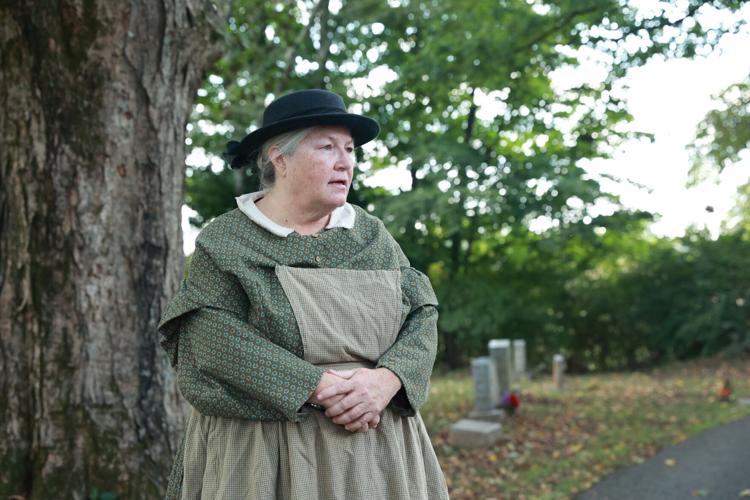
Dottie Meadows portrays Spring Hill's Sarah Odil
“It really makes history come to life,” says Hill. “You can still get an idea of what happened, but it doesn’t feel as real.”
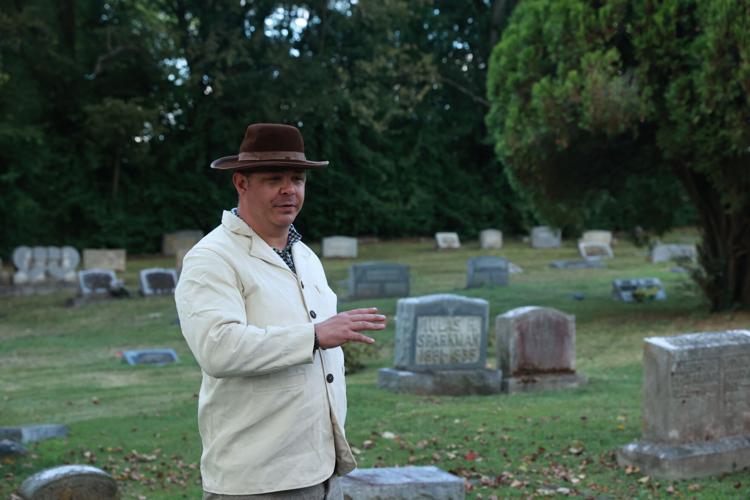
The next stop on the tour centered around Spring Hill's first female postal clerk, Irene Cheairs. Cheairs took the job in 1913. Within two years, she became the vice president of the Tennessee Postmasters. Cheairs was also one of the founding members of the original Spring Hill Cemetery Association. Recognizing its decline in 1922, she founded an organization to help with the upkeep of the cemetery.
Next up was Sara Odil, the first woman to win against a man in the Tennessee Supreme Court. She took her intended husband, Hugh Brown, to court following Brown's marriage to another woman for "the breach of promise to marriage." The court ruled in Odil's favor, awarding her $2,800. Odil used the money from her settlement to purchase the house that became known locally as The Kissing House, because it was “the house that kisses bought.”
Around the next corner on the tour was Marcus Nellums, who grew up in Spring Hill and served as the financial manager for Belmont University (then known as Ward-Belmont College). When World War I broke out, Nellums wasn’t allowed to serve because he was blind in one eye, so he joined up with the YMCA instead, helping entertain troops stationed in France. After the war was over, Nellums moved back to Tennessee and became an insurance salesman and a dairy farmer. He was buried with his wife and one of their daughters.

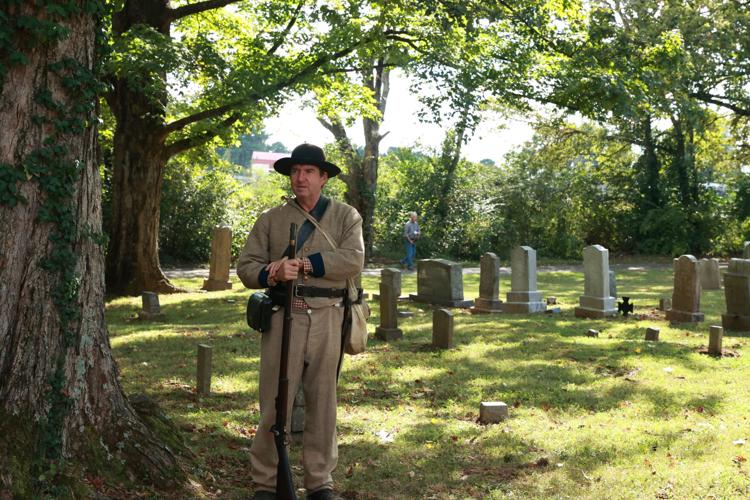
The Reverend John Harmon Nichols, portrayed by Rob Dunbar
Following Nellums was Greg Wade, who shared the story of Methodist Rev. John H. Nichols. Nichols left the seminary to fight in the Civil War for the Confederacy with his brother. He was shot in the hip during the Battle of Stones River, but he survived, with the bullet remaining lodged in his hip for nine years. Nichols resides in the back of the cemetery with one of his 12 children and his second wife.
“I learn more about history from stuff like this than I ever have from any book,” says Rob Dunbar, who portrayed Nichols. “It brings it to life in a way you never get in a classroom.”
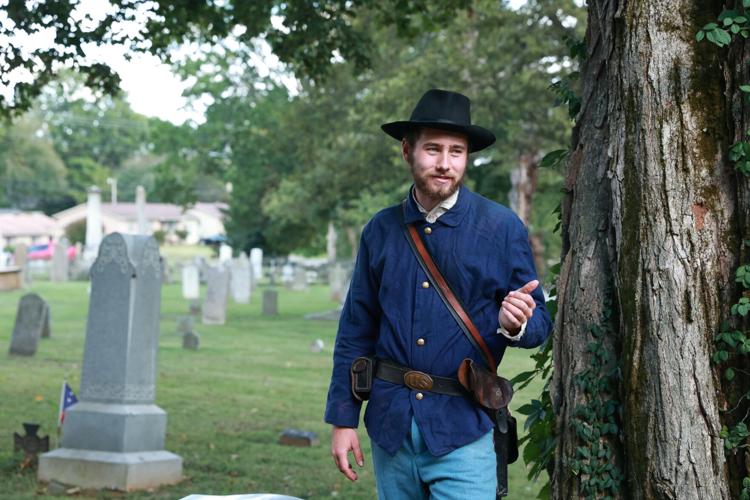
Jaden Granda portrayed the next featured historical figure, Alexander Forbes — a member of the 8th Michigan Cavalry, Company A, and one of only two Union soldiers buried in the cemetery. Forbes became blind in one eye due to erysipelas and was declared unfit for duty. Though he returned to Michigan, Forbes and his wife eventually moved to Spring Hill, where they spent the rest of their lives.

Alexander Forbes, portrayed by Jaden Granda
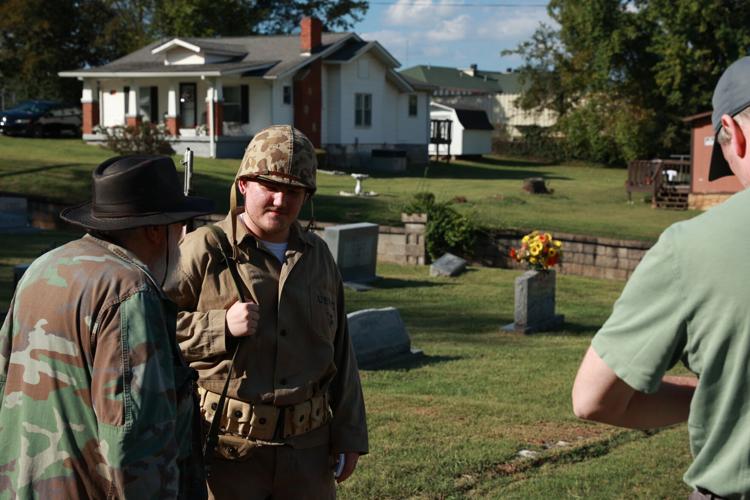
The tour concluded with Benny Jett's portrayal of Williamson County native William “Billy” Sedberry, the most modern reenactment featured on the tour. Sedberry fought in World War II as a member of the Marine Corps. He returned to work on his father’s farm, marrying Anne Adair and fathering four children. Sedberry, who was a truck driver in the area for 40 years, is buried in the cemetery near his sister.
“Reenacting keeps history alive,” Hoover says. “This cemetery ... we’re keeping their stories alive, it helps people remember where we came from. A lot of the founders of this cemetery are buried in here. It was part of the battlefield on Nov. 9, 1864. I think [events like this] remind people, despite all the modern development, of where that area came from.”